
Meet Your ISHI 37 Speakers: Raman Sandhu-Kirmer
Mesa Forensic Laboratory replaced almost every major piece of its DNA workflow at once: new quantification kits, new amplification chemistries, new instruments, new thermocyclers. Every system passed validation. Turnaround times got worse. None of it was a science problem. The methods worked exactly as validated. What nobody planned for was staffing, training schedules, and a […]
Meet Your ISHI 37 Speakers: Tim Kalafut
“Absence of evidence is not evidence of absence.” It’s commonly credited to Carl Sagan, though nobody’s entirely sure that’s right, and forensic DNA testimony has mostly treated it as an unstated rule: no DNA means no information, move on to the next finding. Kalafut’s talk argues the opposite. If someone is alleged to have carried […]
Student Ambassador Poster Preview: Daniel Arend on DNA Transfer in Domestic Violence Cases
Daniel Arend’s biting samples told a clear story: even 16 hours after contact, and after volunteers had gone back to their normal day, DNA from the person of interest was recoverable at near-complete profile quality in most samples. His strangulation samples told a very different one. Skin-to-skin contact produced only partial profiles, often too low […]
Student Ambassador Poster Preview: Elizabeth Kowalcyzk on Low-Pass Whole-Genome Sequencing as a Cost-Effective Forensic Workflow
Elizabeth Kowalczyk expected that cutting the sequencing depth would cost her the data. It didn’t. Even at DNA inputs as low as 0.1 nanograms, her low-pass sequencing runs produced genotype accuracies above 99.8%. Her research asks whether whole-genome sequencing, usually run at a depth and price that puts it out of reach for many forensic […]
Student Ambassador Poster Preview: Xiaomeng (Simone) Yang on Predicting Body Weight and Muscularity with MicroRNAs
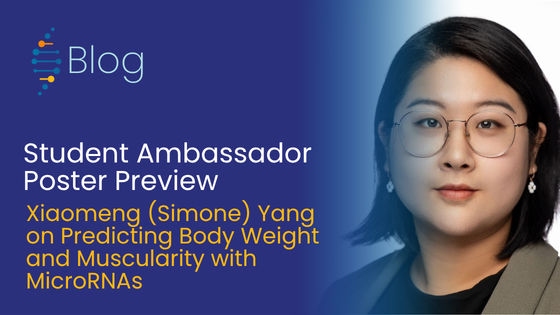
Simone Yang’s data told her saliva samples were the weaker ones: lower sequencing quality, fewer usable reads than blood. Then the validation results came back, and saliva held the strongest, most consistent markers in the entire study. She’s investigating whether microRNAs, small molecules that shift with a person’s metabolism and physical activity, can predict body […]
Meet Your ISHI 37 Speakers: Ronaldo Carneiro da Silva Junior
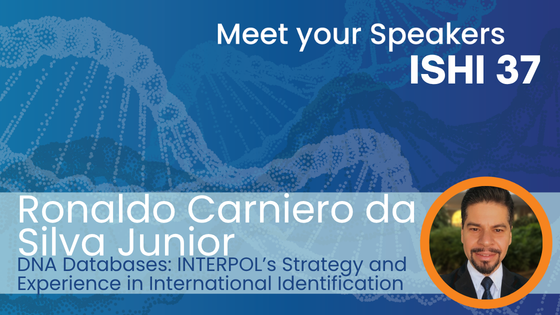
196 member countries. One shared DNA infrastructure. Most working analysts have never touched it. INTERPOL runs two separate systems. One does what a national database already does: compares one profile to another. The other, I-Familia, runs kinship algorithms to compare a sample against relatives, built specifically for the unidentified remains and missing persons cases a […]
Student Ambassador Poster Preview: Irina Badell Garcia on Estimating Time Since Death with DNA Methylation
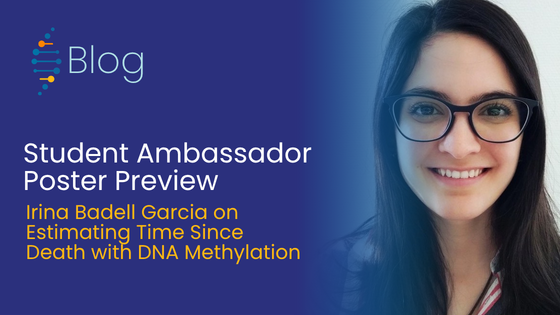
Irina Badell Garcia knew her way around CODIS STRs and mitochondrial kinship testing before her PhD even started. Then her advisor, Dr. Aaron Shafer, asked her to learn something she’d never touched: DNA methylation, at a taphonomic research facility that doesn’t have a counterpart anywhere else in Canada. Her research asks whether the chemical marks […]
What They’re Looking Forward to at ISHI 37: A Conversation with the ISHI Advisory Committee
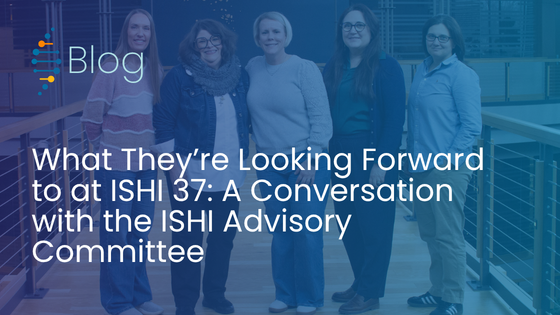
The people who help shape ISHI’s agenda have a front-row view of where forensic science is heading. So, what are they actually looking forward to? https://youtu.be/RQDgMbFY0Wk Three of the four ISHI Advisory Committee members are watching artificial intelligence — but for very different reasons. Shena Latcham is thinking about cold cases — specifically, the friction […]
It Takes a Village: The August 2026 ISHI Report is Now Available
August tends to arrive in forensic science labs with a kind of dual energy, one foot still in summer’s casework, the other already leaning toward Providence. ISHI 37 is just a few months out, and the August issue of The ISHI Report arrives in that window, a preview of some of the stories and conversations […]