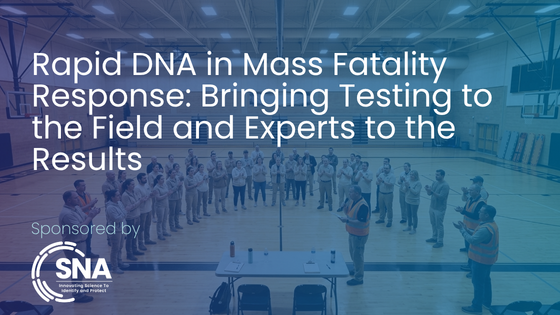
Mass fatality incidents (MFIs) present some of the most complex human identification challenges forensic scientists will face. Responders may need to manage large numbers of unidentified human remains, personal effects,

Mass fatality incidents (MFIs) present some of the most complex human identification challenges forensic scientists will face. Responders may need to manage large numbers of unidentified human remains, personal effects,
In forensic DNA analysis, confidence begins long before amplification and interpretation. It starts with the integrity of every sample, every tube, and every pipette tip that touches precious evidence. Because
No one has hours to scour the papers to keep up with the latest news, so we’ve curated the top news stories in the field of Forensic Science for this week.
As next-generation sequencing (NGS) becomes more commonplace in forensic genetics, one of the critical questions facing NGS-equipped laboratories is: how can scientists consistently interpret, share and compare short tandem repeats
Massively parallel sequencing (MPS) has long promised to transform forensic DNA analysis. The ability to interrogate more loci, generate richer allele data, and multiplex dozens of samples in a single
No one has hours to scour the papers to keep up with the latest news, so we’ve curated the top news stories in the field of Forensic Science for this week.
Othram has developed a new method to embed proof of proper handling and authenticity directly into the DNA evidence itself, adding a molecular layer of verification that complements traditional chain-of-custody
Mesa Forensic Laboratory replaced almost every major piece of its DNA workflow at once: new quantification kits, new amplification chemistries, new instruments, new thermocyclers. Every system passed validation. Turnaround times
No one has hours to scour the papers to keep up with the latest news, so we’ve curated the top news stories in the field of Forensic Science for this week.