
Under the Microscope – Brittney Chilton
In her presentation at ISHI, Brittney Chilton (Criminalist II at the Washoe County Sheriff’s Office Forensic Science Division) will share the story of Washoe County employee, Chris Long. In 2014, Chris was diagnosed with AML/MDS Leukemia. He underwent a stem cell/bone marrow transplant and volunteered to participate in a case study led by the Washoe […]
Under the Microscope – Regina Wells
Laboratories across the country are dealing with backlogs of sexual assault kits waiting to be tested. Laws in many states have changed requiring all kits to be tested, increasing the caseload for laboratories as well as the turnaround time in which results are obtained. The ANDE 6C Rapid DNA System can analyze an evidence sample […]
Under the Microscope – Lisa Mertz
Within the past 15-20 years, successful technological advances in forensic science have solved many cold cases. The increase in the number of possible items that might presently be tested as evidence in criminal matters, in general, has led to the need for collaborative efforts among the New York City DNA Laboratory, the New York City […]
Under the Microscope – Charlotte Word
In the early days of DNA profiling, Restriction Fragment Length Polymorphism (RFLP) testing required a relatively large amount of DNA for the development of a DNA profile, and the bloodstain left behind was still visible or detectable using presumptive testing. By the late 1990s, Polymerase Chain Reaction (PCR) testing had replaced RFLP, and the amount […]
Under the Microscope – Kevin Cheng
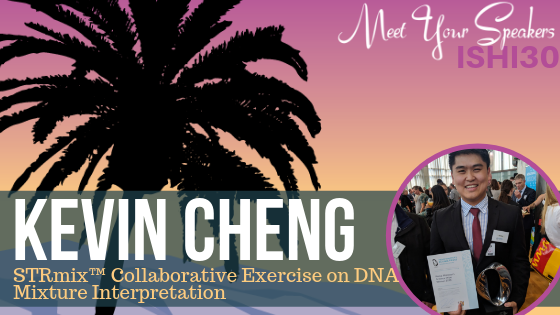
Reproducibility is one of the main principles of the scientific method. Reproducibility in forensic DNA interpretation typically relates to the reported match statistic. The development of probabilistic genotyping (PG) solutions using semi-continuous and continuous models was partly in a response to intra and inter laboratory differences to improve reproducibility of the results. However, there are still […]
The Future of Synthetic Biology – An Interview with Andrew Hessel
What if you could cure cancer with a synthetic virus or pre-load your children with genetic information? The future of synthetic biology is here. In this interview, Andrew Hessel, founder of Humane Genomics, explains how tailor-made viruses may one day cure cancer, how IVF will be replaced by a less expensive and more effective method, […]
To Catch a Predator – An Interview with Paul Holes
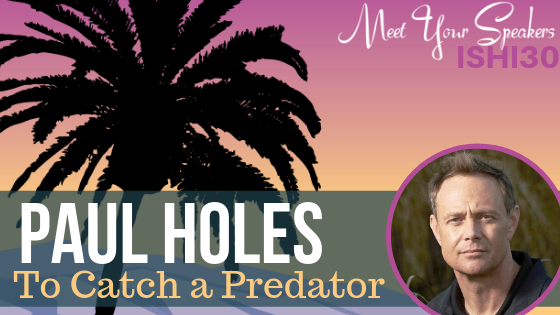
In his keynote address at ISHI 30 this September, Paul Holes will detail how investigative genealogy techniques, determination, and more than a little bit of patience led to the identification and capture of the Golden State Killer. We recently interviewed Paul and asked him what drew him to the Golden State Killer case, how he […]
Ethical Issues Around Investigative Genealogy
Craig Klugman, a Bioethicist at DePaul University details the issues surrounding commercial DNA databases and using these databases for investigative genealogy purposes, and offers some paths forward. Transcript: Laura: Hi, we’re here at ISHI 29 with Craig Klugman. Craig, tell us a little bit about yourself. Craig: Well, I’m a […]
Using Genetic Genealogy to Provide Answers – an Interview with CeCe Moore

Sarah Dingle, an investigative journalist with the Australian Broadcasting Corporation interviews CeCe Moore to discuss how she’s used genetic genealogy to help adoptees and donor conceived individuals find their biological families, and is now applying the same techniques to cold cases. Transcript: Sarah: Hi, I’m Sarah Dingle. I’m an Investigative Journalist […]