

A Paradyme Shift in Forensic DNA Analaysis: Investigation into the Reduced Stutter Chemistry and its Implications for Profile Interpretation

A Paradyme Shift in Forensic DNA Analaysis: Investigation into the Reduced Stutter Chemistry and its Implications for Profile Interpretation

The interpretation of forensic DNA profiles can be affected by multiple factors, including the number of contributors, the quantity and quality of the DNA template, and the presence of PCR artefacts. Among these artefacts, stutter remains the most prevalent and continues to pose a challenge for both traditional and probabilistic interpretation methods.

Recently, a novel DNA polymerase (Reduced Stutter Polymerase-RSP) was designed to substantially reduce stutter formation [1]. This polymerase is incorporated in the Paradyme 27GY System. In this talk, we evaluate the performance of the kit on ground-truth single-source and mixed DNA profiles. This includes an assessment of allele concordance and locus and allele-specific stutter rates. We also present how the low-stutter chemistry performs when assessing the number of contributors and the results of sensitivity and specificity testing of complex mixed DNA profiles using probabilistic genotyping methods.

Our early findings indicate that using the RSP-formulated kit simplifies profile analysis and interpretation, with streamlined workflows contributing to faster turnaround times. These results demonstrate the advantages and practical implications of the Paradyme 27GY kit for operational forensic laboratories, particularly in the interpretation of complex DNA mixtures.

Reference

[1] US20240344039A1 – Engineered dna polymerase with reduced artifact formation – Google Patents

The interpretation of forensic DNA profiles can be affected by multiple factors, including the number of contributors, the quantity and quality of the DNA template, and the presence of PCR artefacts. Among these artefacts, stutter remains the most prevalent and continues to pose a challenge for both traditional and probabilistic interpretation methods.

Recently, a novel DNA polymerase (Reduced Stutter Polymerase-RSP) was designed to substantially reduce stutter formation [1]. This polymerase is incorporated in the Paradyme 27GY System. In this talk, we evaluate the performance of the kit on ground-truth single-source and mixed DNA profiles. This includes an assessment of allele concordance and locus and allele-specific stutter rates. We also present how the low-stutter chemistry performs when assessing the number of contributors and the results of sensitivity and specificity testing of complex mixed DNA profiles using probabilistic genotyping methods.

Our early findings indicate that using the RSP-formulated kit simplifies profile analysis and interpretation, with streamlined workflows contributing to faster turnaround times. These results demonstrate the advantages and practical implications of the Paradyme 27GY kit for operational forensic laboratories, particularly in the interpretation of complex DNA mixtures.

Reference

[1] US20240344039A1 – Engineered dna polymerase with reduced artifact formation – Google Patents

Workshop currently at capacity. A waitlist is available to join on our registration page.

Brought to you by

Worldwide Association of Women Forensic Experts

Jo-Anne Bright

PHF Science

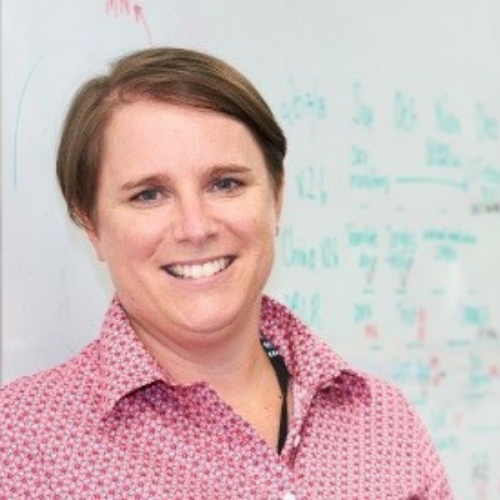
Jo-Anne Bright is a Senior Science Leader within the Forensic Biology group at PHF Science, where she has worked since 1999. Jo is one of the co developers of STRmix™, expert software for the interpretation of forensic DNA profiles and the new Australasian standard.
Speaker Image

Michael Coble

Professor and Executive Director, Center for Human Identification (CHI), University of North Texas Health Science Center

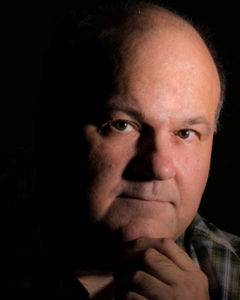
Michael Coble, PhD, is a Professor and the Executive Director of the Center for Human Identification at the University of North Texas Health Fort Worth. Dr. Coble received his PhD in Genetics from The George Washington University. He has over 100 peer-reviewed publications in forensic DNA analysis and interpretation and is recognized among the top 2% of highly cited researchers worldwide.

Speaker Image

Submit Question to a speaker