Build your Brand – Build your Culture: Putting Success in Succession Planning (FLA)

Build your Brand – Build your Culture: Putting Success in Succession Planning (FLA)

Description:

Most forensic laboratories do not intentionally plan for succession – they survive it. Leadership transitions are often rushed and reactive, driven by fear of vacancies rather than readiness or desire. The result is predictable: reluctant leaders, disengaged teams, and repeated cycles of burnout.

This full-day workshop reframes succession planning as the natural outcome of intentional brand building at three interconnected levels: the individual leader, the laboratory, and the emerging leader. Participants will examine how leadership brand and organizational culture influence whether leadership roles are viewed as opportunities to pursue or obligations to avoid. When leadership identity is clear and culture is healthy, future leaders step forward because they want to – not because they were pressured.

Grounded in real-world forensic leadership experience, this workshop combines discussion and applied exercises to help attendees assess leadership signals, identify cultural barriers, and intentionally build leadership ecosystems that attract and develop successors long before a vacancy exists.


Learning Outcomes:

  • To understand the relevant standards and recommendations for validation
  • Gain an appreciation of what data is publicly available to support Probabilistic Genotyping
  • Support your laboratory to effectively address common challenges to the use of Probabilistic Genotyping (e.g. mixtures involving relatives, number of contributors, “factor space”, source code availability, activity level propositions)


Intended Audience:

This workshop is intended for DNA analysts, supervisors, technical leaders, attorneys and judges. Some knowledge required.

Description:

Most forensic laboratories do not intentionally plan for succession – they survive it. Leadership transitions are often rushed and reactive, driven by fear of vacancies rather than readiness or desire. The result is predictable: reluctant leaders, disengaged teams, and repeated cycles of burnout.

This full-day workshop reframes succession planning as the natural outcome of intentional brand building at three interconnected levels: the individual leader, the laboratory, and the emerging leader. Participants will examine how leadership brand and organizational culture influence whether leadership roles are viewed as opportunities to pursue or obligations to avoid. When leadership identity is clear and culture is healthy, future leaders step forward because they want to – not because they were pressured.

Grounded in real-world forensic leadership experience, this workshop combines discussion and applied exercises to help attendees assess leadership signals, identify cultural barriers, and intentionally build leadership ecosystems that attract and develop successors long before a vacancy exists.


Learning Outcomes:

  • To understand the relevant standards and recommendations for validation
  • Gain an appreciation of what data is publicly available to support Probabilistic Genotyping
  • Support your laboratory to effectively address common challenges to the use of Probabilistic Genotyping (e.g. mixtures involving relatives, number of contributors, “factor space”, source code availability, activity level propositions)


Intended Audience:

This workshop is intended for DNA analysts, supervisors, technical leaders, attorneys and judges. Some knowledge required.

Pricing:


  • Standard Registration$425

Fees include printed workshop materials, breakfast, lunch, and breaks

Brought to you by

Workshop currently at capacity. A waitlist is available to join on our registration page.

Brought to you by

Worldwide Association of Women Forensic Experts

John Collins

High-Stakes Leadership Consultant and Executive Coach at Critical Victories

John Collins is a High-Stakes Leadership Consultant and Executive Coach at Critical Victories, a company he founded to help people, teams, and organizations thrive in high-pressure environments where perfection is an expectation and failure is a ticket out the door.  He is also among the most respected forensic experts in the United States, recently publishing his first book on leadership and management in forensic science, which was released by Academic Press just last month. 
Speaker Image

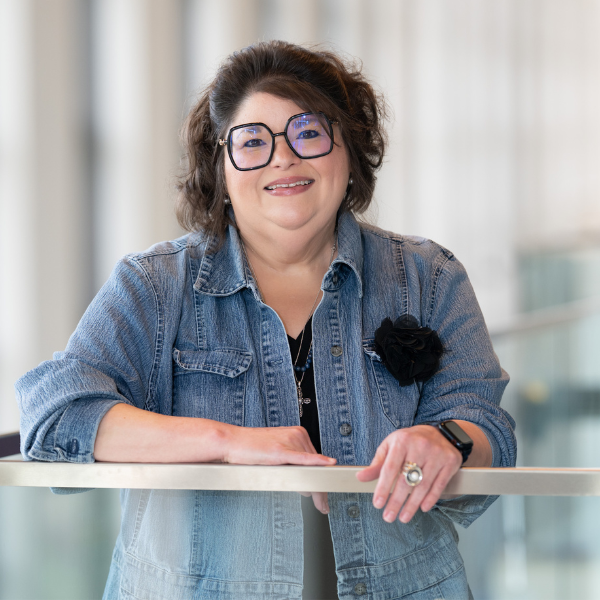
Pamela Marshall

Director, Duquesne University

Dr. Marshall has extensive graduate and undergraduate teaching experience in the forensic disciplines of serology, DNA, and microscopy. Her research interests include low copy number DNA, human and wildlife DNA identification challenges, nanoparticle technology, pressure cycling technology, and PCR enhancement.

Speaker Image

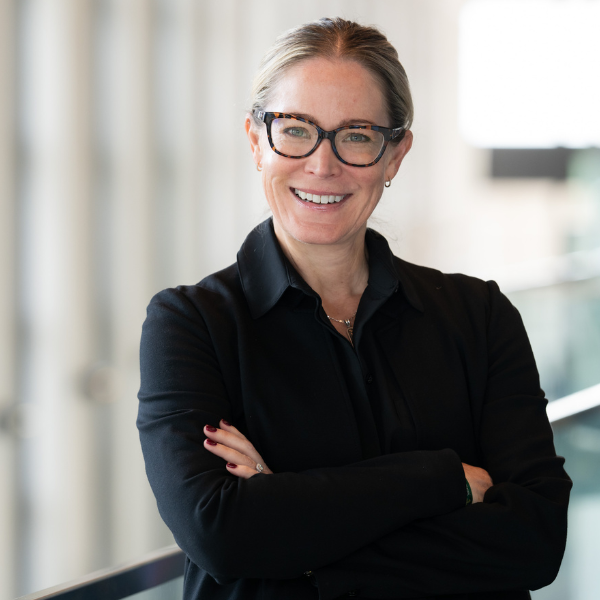
Julie Conover Sikorsky

Forensic Biology Manager, Palm Beach County Sheriff’s Office

Julie Conover Sikorsky is the Forensic Biology Manager at the Palm Beach County Sheriff’s Office. She joined PBSO in 2002 as a Senior Forensic Scientist and became Forensic Biology Manager in 2012. Julie holds a B.S. in Molecular Biology from UC San Diego and M.S. degrees in Forensic Science and Biomedical Science from Marshall University. ABC-certified in Molecular Biology and a Lean Six Sigma Green Belt, she serves on multiple forensic science committees and frequently presents at industry conferences. Dedicated to advancing forensic science, Julie focuses on innovation, process improvement, and mentorship.

Speaker Image

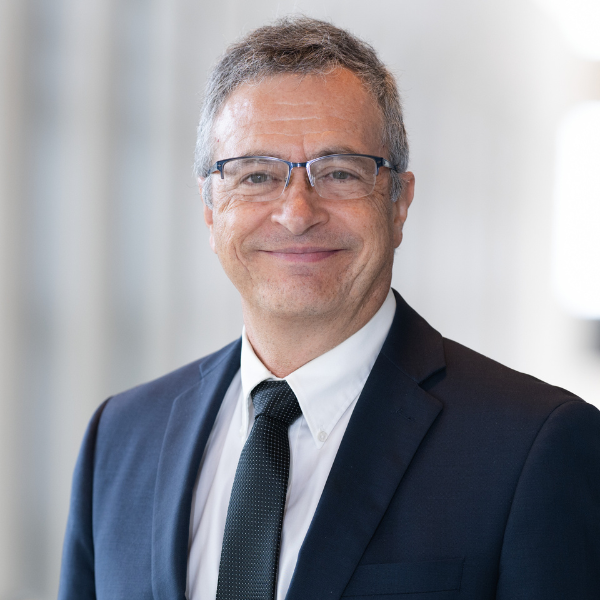
Ray Wickenheiser

Retired Director for the New York State Police Crime Lab System

Dr. Ray Wickenheiser, is the retired Director of the New York State Police Crime Laboratory System, formerly headquartered in Albany, New York.  Ray is now located in Lafayette, Louisiana, where he provides forensic consulting and training. His areas of expertise include crime lab administration, quality management, conflict resolution, forensic DNA and mixture interpretation, serology, hair and fiber trace evidence, physical matching and comparison, glass fracture analysis, forensic grain comparison and forensic investigative genetic genealogy. 

Speaker Image

Submit Question to a speaker