

Serial Offender or Personnel Contamination: Practical Application of Internal Laboratory Databases

Serial Offender or Personnel Contamination: Practical Application of Internal Laboratory Databases

As DNA testing and interpretation methods become more sensitive, more usable DNA is recovered from evidence. Not all of this DNA is suitable for CODIS entry, which makes internal DNA databases increasingly valuable. Our laboratory uses the internal database feature within the TrueAllele® software, which includes three databases searched in every case: evidence, suspect, and internal control. The internal control database contains profiles from all employees in our office, as well as maintenance personnel who have accessed laboratory areas. We also encourage law enforcement personnel to submit their DNA for inclusion, though their participation is voluntary.

Our laboratory implemented probabilistic genotyping for casework in 2017. Although the software began automatically storing casework profiles and standards at that time, we did not fully utilize the internal database functionality until 2020. Shortly after expanding its use, our laboratory received a doublehomicide case involving an undercover police officer and a police informant. Evidence was processed using Promega instrumentation and technology. A single-source profile was developed from the barrel of a disassembled gun; however, because the gun was not collected directly from the scene, the profile did not qualify for CODIS. When we searched the profile within our internal databases, we found associations with evidence from five previously unrelated homicide investigations from the same agency. These cases occurred in different years, were handled by different analysts and detectives, and involved various types of evidence.

We reached out to the agency with this information and asked if a common detective or first responder may have been present at the scenes, and if not, if it was possible there was a serial offender. After some investigation the agency submitted a buccal swab from a crime scene detective, and we were able to confirm it was a match. Once added to the internal control database, that individual was ultimately associated with thirteen cases before retiring from the agency. Prior to identifying the source, the profile had been entered into CODIS in at least one case and later had to be removed. A robust internal control database helps prevent these situations by identifying employee-associated profiles before they are uploaded to CODIS, saving significant time and preventing erroneous entries.

Following this discovery, another employee from the same agency was added to the database in 2022, and their profile has since been linked to sixteen cases. These findings underscore the importance of the internal control database for identifying contamination, as well as the ongoing need for training to prevent such occurrences. Complete elimination of personnel contamination in nonlaboratory settings is unlikely. Previously, profiles determined to be contaminated by an agency employee would have been deemed inconclusive, but the advent of probabilistic genotyping has allowed interpretation guidelines to evolve. Now, if a laboratory or agency employee is detected in a mixture profile, we can do additional probabilistic genotyping runs to peel the known employee out of the mixture so the rest of the profile can still be used for comparison to suspect standards. Although the presence of an agency employee may dilute other contributors, it does not negate their evidentiary value.

Overall, the internal database feature has proven highly beneficial to our laboratory. It has aided in identifying contamination by laboratory and agency personnel as well as linking related evidence across cases. As the database continues to grow, we expect its value to increase further as it continues to provide new investigative leads.

As DNA testing and interpretation methods become more sensitive, more usable DNA is recovered from evidence. Not all of this DNA is suitable for CODIS entry, which makes internal DNA databases increasingly valuable. Our laboratory uses the internal database feature within the TrueAllele® software, which includes three databases searched in every case: evidence, suspect, and internal control. The internal control database contains profiles from all employees in our office, as well as maintenance personnel who have accessed laboratory areas. We also encourage law enforcement personnel to submit their DNA for inclusion, though their participation is voluntary.

Our laboratory implemented probabilistic genotyping for casework in 2017. Although the software began automatically storing casework profiles and standards at that time, we did not fully utilize the internal database functionality until 2020. Shortly after expanding its use, our laboratory received a doublehomicide case involving an undercover police officer and a police informant. Evidence was processed using Promega instrumentation and technology. A single-source profile was developed from the barrel of a disassembled gun; however, because the gun was not collected directly from the scene, the profile did not qualify for CODIS. When we searched the profile within our internal databases, we found associations with evidence from five previously unrelated homicide investigations from the same agency. These cases occurred in different years, were handled by different analysts and detectives, and involved various types of evidence.

We reached out to the agency with this information and asked if a common detective or first responder may have been present at the scenes, and if not, if it was possible there was a serial offender. After some investigation the agency submitted a buccal swab from a crime scene detective, and we were able to confirm it was a match. Once added to the internal control database, that individual was ultimately associated with thirteen cases before retiring from the agency. Prior to identifying the source, the profile had been entered into CODIS in at least one case and later had to be removed. A robust internal control database helps prevent these situations by identifying employee-associated profiles before they are uploaded to CODIS, saving significant time and preventing erroneous entries.

Following this discovery, another employee from the same agency was added to the database in 2022, and their profile has since been linked to sixteen cases. These findings underscore the importance of the internal control database for identifying contamination, as well as the ongoing need for training to prevent such occurrences. Complete elimination of personnel contamination in nonlaboratory settings is unlikely. Previously, profiles determined to be contaminated by an agency employee would have been deemed inconclusive, but the advent of probabilistic genotyping has allowed interpretation guidelines to evolve. Now, if a laboratory or agency employee is detected in a mixture profile, we can do additional probabilistic genotyping runs to peel the known employee out of the mixture so the rest of the profile can still be used for comparison to suspect standards. Although the presence of an agency employee may dilute other contributors, it does not negate their evidentiary value.

Overall, the internal database feature has proven highly beneficial to our laboratory. It has aided in identifying contamination by laboratory and agency personnel as well as linking related evidence across cases. As the database continues to grow, we expect its value to increase further as it continues to provide new investigative leads.

Workshop currently at capacity. A waitlist is available to join on our registration page.

Brought to you by

Worldwide Association of Women Forensic Experts

Marissa Esterline

Forensic Scientist, Cuyahoga County Regional Forensic Science Laboratory

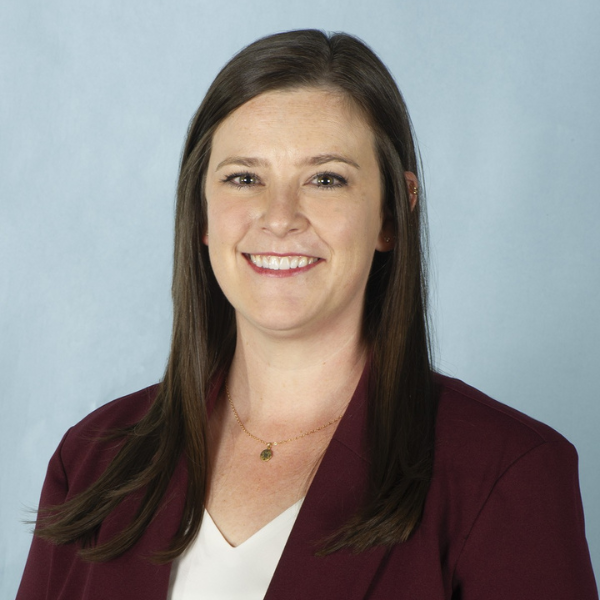
Marissa Esterline is a Forensic Scientist at the Cuyahoga County Regional Forensic Science Laboratory in Cleveland, Ohio, with fifteen years of experience in forensic DNA analysis. She holds a bachelor’s degree in forensic biology from Ohio Northern University and a master’s degree in forensic DNA and serology from the University of Florida.
Speaker Image

Submit Question to a speaker