

The Five Year Mark – Innovations in the Identification of the Lake and Ng Serial Killer Victims

The Five Year Mark – Innovations in the Identification of the Lake and Ng Serial Killer Victims

Leonard Lake and Charles Ng were a serial killer duo operating in Central California between 1982 and 1985. The pair are credited with 11 confirmed and are suspected in as many as 25 additional homicides, although the true number of victims may never be known. While several of their victims were buried near Lake’s cabin in Wilseyville, CA, many were cremated in a homemade kiln located on the property.

Lake committed suicide by ingesting cyanide four days after the pair were arrested in 1985. Ng escaped to Canada but was extradited to California in 1991. In 1999 Ng was convicted of 11 counts of first-degree murder and sentenced to death. Following California’s 2019 moratorium on executions, Ng remains incarcerated at the California Medical Facility in Vacaville, CA.

In August 2021, the Calaveras County Sheriff’s Office initiated an effort to use Forensic Investigative Genetic Genealogy (FIGG) to identify as many of the unidentified Lake and Ng victims as possible. The effort has proven to be exceptionally challenging. Although the remains of several victims were found buried intact, the majority consist of highly fragmented skeletal material exhibiting extensive thermal damage. More than one thousand fragments are present.

The highly compromised nature of the remains, along with their small size and fragile condition, has pushed the limits of current forensic DNA technology. The two major challenges have been the high level of bacterial content and the limited human DNA diversity. Each would have been difficult on its own, but the combination of the two has been the core limitation, even when quantifiable DNA has been detected. Traditional assumptions based on visual inspection have not reliably predicted the presence of usable DNA; specimens that appeared severely compromised have produced meaningful amounts of human DNA, while others that appeared more promising have not. Despite these challenges, several new victims have been successfully identified, and at least one suspected victim has been confirmed.

This presentation describes our efforts over the past five years to apply specialized forensic DNA technologies to the identification of previously unknown Lake and Ng victims. We describe the technical challenges we have faced, how we have worked to overcome these challenges, and why more difficult specimens may still be pushed over the finish line through a collaborative development of methods beyond normal, traditional sequencing. The presentation will illustrate our success through a case study on the identification of Wilseyville Jane Doe, a young female victim who was identified based on only a single small bone fragment and a rare X-inheritance pattern.

Leonard Lake and Charles Ng were a serial killer duo operating in Central California between 1982 and 1985. The pair are credited with 11 confirmed and are suspected in as many as 25 additional homicides, although the true number of victims may never be known. While several of their victims were buried near Lake’s cabin in Wilseyville, CA, many were cremated in a homemade kiln located on the property.

Lake committed suicide by ingesting cyanide four days after the pair were arrested in 1985. Ng escaped to Canada but was extradited to California in 1991. In 1999 Ng was convicted of 11 counts of first-degree murder and sentenced to death. Following California’s 2019 moratorium on executions, Ng remains incarcerated at the California Medical Facility in Vacaville, CA.

In August 2021, the Calaveras County Sheriff’s Office initiated an effort to use Forensic Investigative Genetic Genealogy (FIGG) to identify as many of the unidentified Lake and Ng victims as possible. The effort has proven to be exceptionally challenging. Although the remains of several victims were found buried intact, the majority consist of highly fragmented skeletal material exhibiting extensive thermal damage. More than one thousand fragments are present.

The highly compromised nature of the remains, along with their small size and fragile condition, has pushed the limits of current forensic DNA technology. The two major challenges have been the high level of bacterial content and the limited human DNA diversity. Each would have been difficult on its own, but the combination of the two has been the core limitation, even when quantifiable DNA has been detected. Traditional assumptions based on visual inspection have not reliably predicted the presence of usable DNA; specimens that appeared severely compromised have produced meaningful amounts of human DNA, while others that appeared more promising have not. Despite these challenges, several new victims have been successfully identified, and at least one suspected victim has been confirmed.

This presentation describes our efforts over the past five years to apply specialized forensic DNA technologies to the identification of previously unknown Lake and Ng victims. We describe the technical challenges we have faced, how we have worked to overcome these challenges, and why more difficult specimens may still be pushed over the finish line through a collaborative development of methods beyond normal, traditional sequencing. The presentation will illustrate our success through a case study on the identification of Wilseyville Jane Doe, a young female victim who was identified based on only a single small bone fragment and a rare X-inheritance pattern.

Workshop currently at capacity. A waitlist is available to join on our registration page.

Brought to you by

Worldwide Association of Women Forensic Experts

Colleen Fitzpatrick

Founder, Identifinders International

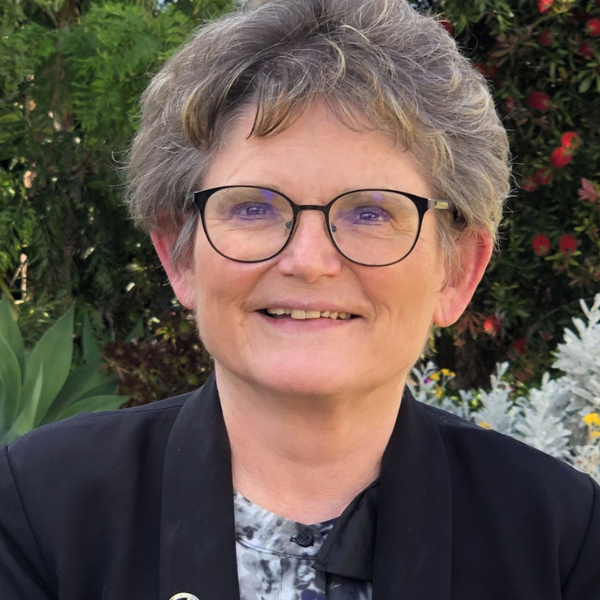
Colleen Fitzpatrick, PhD is widely recognized as the founder of modern Investigative Forensic Genetic Genealogy. She has pioneered the use of genetic genealogy Y-STR and autosomal SNP analysis for generating forensic intelligence on cold cases sometimes decades old. Dr. Fitzpatrick’s expertise with compromised DNA has led to identifications that otherwise were believed to have gone beyond the reach of modern technology.
Speaker Image

Submit Question to a speaker