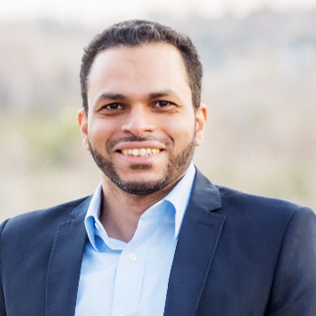
Mohamed Elsayed
Postdoc, Wheeler Lab | University of Toronto
Mohamed did his PhD in Biomedical Engineering at the University of Toronto, and he’s now a postdoc with the Wheeler lab and the University of Toronto.
Home » Toward Analysis at the Point of Need: A Digital Microfluidic Approach to Processing Multi-Source Sexual Assault Samples
Forensic case samples collected in sexual assaults typically contain DNA from multiple sources, which complicates short-tandem repeat (STR) profiling. These samples are typically sent to a laboratory to perform differential extraction – to separate the DNA from sperm and non-sperm sources – prior to STR analysis. We automated and miniaturized a variant of differential extraction, differential digestion, using digital microfluidics, a fluid handling technique in which samples are manipulated in a substrate without microchannels, and we demonstrated compatibility with Rapid DNA analysis.
In digital microfluidics, droplets of fluid are manipulated by applying a series of electrical potentials to an array of electrodes that is covered with a dielectric layer and a hydrophobic layer. The electrostatic forces that are generated can be made to move, dispense, split, and mix droplets on the array, and the technique is called “digital” because the space over each electrode either has (1) or does not have (0) a droplet (a “bit”), and each bit is individually addressable. In the past, digital microfluidics has been used to automate processes including ELISA and sample processing for genome sequencing, both of which require many sequential reagent delivery and wash steps, generating “laboratory quality” results even in remote settings far from the laboratory. The programmability inherent to digital microfluidics led us to hypothesize that it could be well suited to automate differential digestion, which includes a long list of steps that must be carried out with high precision in terms of volume, time, mixing efficiency, and temperature.
The presentation will describe the development of a differential digestion protocol performed automatically using digital microfluidics, using a customized version of the DropBot system. Performance of this protocol was evaluated as applied to buccal swabs spiked with semen and vaginal swabs collected up to 72 hours post-coitus. STR profiles were generated from samples processed in this manner using both conventional laboratory methods and the ANDE™ 6C Rapid DNA System.
In sum, an automated, miniaturized sample pre-processing method for separating the DNA contained in sexual assault samples is demonstrated. This type of automated processing using digital microfluidics, especially when combined with Rapid DNA Analysis, has the potential to be used for processing of sexual assault samples in hospitals, police offices, and other locations outside of the laboratory.
Forensic case samples collected in sexual assaults typically contain DNA from multiple sources, which complicates short-tandem repeat (STR) profiling. These samples are typically sent to a laboratory to perform differential extraction – to separate the DNA from sperm and non-sperm sources – prior to STR analysis. We automated and miniaturized a variant of differential extraction, differential digestion, using digital microfluidics, a fluid handling technique in which samples are manipulated in a substrate without microchannels, and we demonstrated compatibility with Rapid DNA analysis.
In digital microfluidics, droplets of fluid are manipulated by applying a series of electrical potentials to an array of electrodes that is covered with a dielectric layer and a hydrophobic layer. The electrostatic forces that are generated can be made to move, dispense, split, and mix droplets on the array, and the technique is called “digital” because the space over each electrode either has (1) or does not have (0) a droplet (a “bit”), and each bit is individually addressable. In the past, digital microfluidics has been used to automate processes including ELISA and sample processing for genome sequencing, both of which require many sequential reagent delivery and wash steps, generating “laboratory quality” results even in remote settings far from the laboratory. The programmability inherent to digital microfluidics led us to hypothesize that it could be well suited to automate differential digestion, which includes a long list of steps that must be carried out with high precision in terms of volume, time, mixing efficiency, and temperature.
The presentation will describe the development of a differential digestion protocol performed automatically using digital microfluidics, using a customized version of the DropBot system. Performance of this protocol was evaluated as applied to buccal swabs spiked with semen and vaginal swabs collected up to 72 hours post-coitus. STR profiles were generated from samples processed in this manner using both conventional laboratory methods and the ANDE™ 6C Rapid DNA System.
In sum, an automated, miniaturized sample pre-processing method for separating the DNA contained in sexual assault samples is demonstrated. This type of automated processing using digital microfluidics, especially when combined with Rapid DNA Analysis, has the potential to be used for processing of sexual assault samples in hospitals, police offices, and other locations outside of the laboratory.
Workshop currently at capacity. A waitlist is available to join on our registration page.
Brought to you by

Postdoc, Wheeler Lab | University of Toronto
Mohamed did his PhD in Biomedical Engineering at the University of Toronto, and he’s now a postdoc with the Wheeler lab and the University of Toronto.