
In forensic DNA analysis, confidence begins long before amplification and interpretation. It starts with the integrity of every sample, every tube, and every pipette tip that touches precious evidence. Because even trace contamination can compromise results, Eppendorf has designed tools not only for precision, but also for contamination control, documentation, and workflow consistency.
Why Contamination Control Matters in Forensic DNA Analysis
Human DNA contamination remains one of the primary concerns in forensic workflows. From sample collection and storage through extraction, setup, and downstream analysis, laboratories must work within tightly controlled conditions to minimize the risk of introducing foreign DNA. In response to this need, ISO 18385 was established to define requirements for products used in the collection, storage, and analysis of biological material for forensic purposes.
Eppendorf addresses these demands with its Forensic DNA Grade consumables, developed to support laboratories working to reduce contamination risk in highly sensitive applications. These products are manufactured under controlled conditions that include highly automated production lines and stringent access controls. Together, these measures help support compliance with the requirements outlined in ISO 18385.
Consumables Designed for Sensitive Forensic Workflows
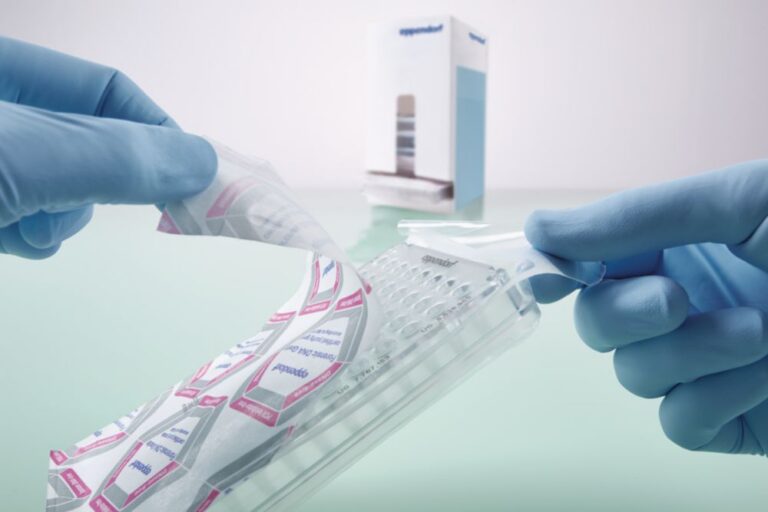
For forensic laboratories, product purity is not a marketing claim; it is an operational requirement. Eppendorf Forensic DNA Grade consumables are produced and monitored with this reality in mind. Packaging options such as individually blistered units, small batches in resealable bags, or individual racks help protect products from contamination before they ever reach the bench.
Just as important, the purity claims are verified through strict testing. The test parameters and sensitivity levels for Eppendorf Forensic DNA Grade consumables correspond to the requirements of ISO 18385. Verification is performed by an independent external testing laboratory accredited according to ISO 17025, the same accreditation framework widely applied in forensic laboratories.
Lot-specific certificates from the testing laboratory confirm compliance with critical purity criteria, including products being:
- DNase-free (< 1.0 x 10⁻⁷ Kunitz units)
- RNase-free (< 1.0 x 10⁻⁹ Kunitz units)
- PCR inhibitor-free (fewer than 10 targets amplifiable)
- Human DNA-free (< 0.5 pg/µL)
This level of documentation supports both internal quality processes and external audits. For laboratories that need traceability and proof of performance, having lot-specific certificates available adds confidence to day-to-day operations.
Building Trust Through Traceability and Accountability
Forensic laboratories often operate under intense scrutiny, where every detail of the workflow may need to stand up to legal and scientific review. That makes traceability essential.
In accordance with ISO 18385 requirements, a staff DNA exclusion database has been established to help support forensic laboratories in investigating potential contamination events. In addition, laboratories can register product lot(s) on Eppendorf’s website to receive a notification should the registered product lot be found to fail product or quality specifications. Laboratories will be informed of the failure by email.
This kind of quality framework matters because it goes beyond product performance alone. It demonstrates a system built to support forensic users when accountability, documentation, and rapid response are most important.
Where Automation Strengthens Forensic DNA Workflows
Contamination control is one side of the equation. The other is workflow consistency.
Forensic laboratories are under growing pressure to process more samples without sacrificing quality. Manual handling steps can introduce variability, slow throughput, and increase opportunities for error. Automation helps address these challenges by standardizing repetitive tasks, reducing hands-on time, and supporting reproducible liquid handling across runs and operators.
Eppendorf’s semi-automated and fully automated pipettes can play a key role here, especially in sample preparation and PCR setup workflows where precision and consistency are critical. By pairing high-purity consumables with automated liquid handling solutions, laboratories can create a more controlled process from reagent dispensing to reaction setup. This not only improves efficiency but also helps reduce the risk associated with repeated manual pipetting in sensitive forensic applications.
For bench scientists, automation means more time for reviewing results, troubleshooting exceptions, and maintaining quality standards. For lab managers, it means a workflow that is easier to scale, validate, and defend.
A Practical Approach for Modern Forensic Labs
In practice, strong forensic DNA workflows depend on both product quality and process design. High-purity consumables help protect the sample. Automation helps protect the workflow.
Eppendorf’s portfolio speaks to both needs. Its Forensic DNA Grade consumables are designed for laboratories that require strict contamination control, independently verified purity, and lot-level traceability. Its automation tools complement these strengths by helping laboratories reduce manual variability and improve operational consistency.
For forensic DNA analysts and laboratory teams, the value is straightforward: fewer opportunities for contamination, more confidence in daily workflow performance, and stronger support for quality-driven decision-making.
Conclusion
In forensic science, reliability is built step by step. The right consumables and liquid handling tools can make those steps more secure, more consistent, and more defensible.
By combining controlled manufacturing, ISO-aligned purity testing, protective packaging, lot-specific certification, and automation-ready workflow support, Eppendorf offers solutions well suited to the demands of forensic DNA applications. For laboratories focused on protecting sample integrity while improving efficiency, that combination can make a measurable difference where it matters most: the quality and credibility of the final result.
Click here to learn more about Eppendorf’s Liquid Handling portfolio.