
She’s not trying to undermine the change. She doesn’t realize she’s resisting it.
That’s not a generous reading of a difficult team dynamic. It’s what the behavioral science behind change actually shows. When someone has a natural propensity toward negative emotion, they tend to experience change as loss. They grieve it, or they fear it, even before they can name what they’re losing.
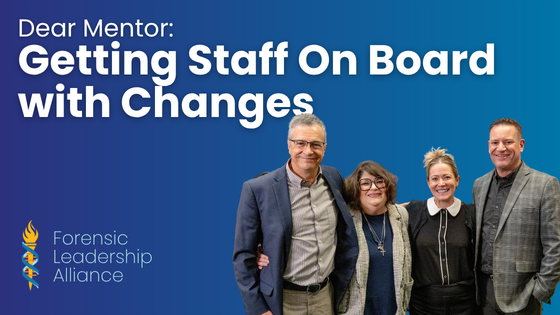
Three members each submitted a version of the same question to the FLA’s mentors: how do you get staff on board with necessary changes, particularly when senior scientists resist?
The mentors didn’t offer workarounds. They offered frameworks.
Know Who Your Resistant Adopters Are Before the Meeting
Julie Sikorsky’s first move is front-loaded: understand your team’s dynamics before any change announcement goes out.
Her lab uses CliftonStrengths, facilitated by fellow FLA mentor John Collins, to build that picture. The tool, she said, has given her “some great insight into the staff and the staff dynamics and understanding who might be my resistant adopters to change.”
That intelligence matters most when the resistant adopter carries seniority. Sikorsky names the dynamic plainly: “it is tough when you have more senior people because they’re always looked up to and they’re like, oh, if they don’t like it, something must be wrong with it.”
Her response to that isn’t to go around the senior staff member. It’s to bring them in before the all-hands. Convince them privately. Then let them carry the message outward.
“You might have a newer person, a more senior person, get on there. They’re going to work together. And then they’re going to help spread the good news of whatever it is you want to bring on board.”
Timing is the other variable she controls deliberately. Sikorsky introduces potential changes early, before decisions are finalized, so people have some exposure before the formal announcement. The Kubler-Ross model of how people move through loss sits underneath the approach: familiarity with what’s coming softens the sharpness of the resistance when it arrives. “I’m also a big fan of introducing potential change a little early, get people a little bit used to it.”
The people who push back hardest aren’t a problem to route around. In Sikorsky’s model, they’re the most credible voice in the room if you bring them with you first.
The Choice Underneath the Reaction
John Collins, who coaches leaders through scientifically grounded self-awareness work, starts from the same behavioral premise Sikorsky applies practically: people aren’t wired the same way for change.
“People have different propensities to feel positive and negative emotion,” he explained. Those who lean toward negative emotion “will tend to see change as a loss. And they will grieve that loss, or they will fear the loss. And so they’ll resist it, even though they don’t really realize they’re doing it.” Those who lean positive “are more likely to see changes as an opportunity.”
Understanding this gives lab leaders somewhere to put a frustrating dynamic. The senior scientist who went quiet after the announcement may not be opposed to the change on the merits. She may be processing something she can’t yet articulate.
Collins presses past the explanation, though. Awareness of emotional tendencies is a starting point, not a destination. “We oftentimes choose our response,” he said. And in a professional environment, that choice is consequential. “Our responses in a professional environment need to be very mindful and intentional.”
The lab director who understands this asks a different question before the all-hands. Not: how do I handle resistance? But: who needs a different conversation before this meeting happens?
About the Forensic Leadership Alliance
The FLA was created to give forensic lab leaders access to peer mentorship and practical tools that aren’t easy to find elsewhere. John Collins, Dr. Pamela Marshall, Julie Sikorsky, and Dr. Ray Wickenheiser have been working together since 2020 on leadership development for forensic scientists, with a focus on coaching, mentorship, and team empowerment.
Questions submitted to the FLA mentors are addressed directly, without softening the complexity of what forensic lab leadership actually involves. Topics span managing generational dynamics, navigating change, delegation, public engagement, and succession planning. These are the kinds of challenges that rarely appear in formal training but come up constantly in labs.
Join the Alliance
FLA members receive access to exclusive written and video content, one-on-one coaching sessions at ISHI, and a free leadership resource guide. Membership is free and open to forensic science professionals at any stage of their leadership path.
The FLA also hosts a full-day workshop at ISHI 37 on October 26, 2026 in Providence, Rhode Island. This year’s topic is succession planning as a product of intentional leadership culture: what it looks like when future leaders step forward because they want to, not because they were pressured.
The capacity for critical thinking is already on your team. The conditions for it may not be.