Forensic Science Validation: Principals and Guidance

Forensic Science Validation: Principals and Guidance

Description:

Validation is a critical part of the scientific process for assessing whether a technique is technically sound and can be used in laboratories to produce robust and defensible analytical results. In the forensic science context, validation is mandated for laboratories accredited under the ISO/IEC 17025 standard, yet the standard tells laboratories that methods must be validated but does not provide a rigorous framework describing how a method or technique can or should be validated. This workshop will provide an overview of the newly published NIST report entitled “Validation in Forensic Science: Guiding Principles for the Collection and Use of Validation Data” (available at https://doi.org/10.6028/NIST.IR.8589) and a hands-on demo of the newly developed Validation Assessment Tool (VAST) using data from rapid DNA systems.


Learning Outcomes:

  • Identify and apply key principles from the NIST report Validation in Forensic Science: Guiding Principles for the Collection and Use of Validation Data to evaluate how validation data can be collected, interpreted, and documented in forensic method development.
  • Demonstrate practical use of the Validation Assessment Tool (VAST) by assessing validation data from rapid DNA systems and interpreting outputs to support method validation decisions in a laboratory context.
  • Understand how these principles and tools can be used in day-to-day practice.


Intended Audience:

Open to all attendees. Suitable for those just beginning.


Description:

Validation is a critical part of the scientific process for assessing whether a technique is technically sound and can be used in laboratories to produce robust and defensible analytical results. In the forensic science context, validation is mandated for laboratories accredited under the ISO/IEC 17025 standard, yet the standard tells laboratories that methods must be validated but does not provide a rigorous framework describing how a method or technique can or should be validated. This workshop will provide an overview of the newly published NIST report entitled “Validation in Forensic Science: Guiding Principles for the Collection and Use of Validation Data” (available at https://doi.org/10.6028/NIST.IR.8589) and a hands-on demo of the newly developed Validation Assessment Tool (VAST) using data from rapid DNA systems.


Learning Outcomes:

  • Identify and apply key principles from the NIST report Validation in Forensic Science: Guiding Principles for the Collection and Use of Validation Data to evaluate how validation data can be collected, interpreted, and documented in forensic method development.
  • Demonstrate practical use of the Validation Assessment Tool (VAST) by assessing validation data from rapid DNA systems and interpreting outputs to support method validation decisions in a laboratory context.
  • Understand how these principles and tools can be used in day-to-day practice.


Intended Audience:

Open to all attendees. Suitable for those just beginning.


Pricing:


  • Standard Registration$275

Fee includes lunch and materials.

Workshop currently at capacity. A waitlist is available to join on our registration page.

Brought to you by

Worldwide Association of Women Forensic Experts

Chair

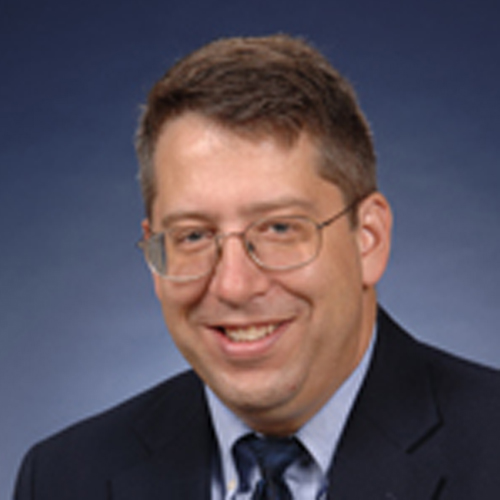
John Butler

NIST Fellow & Special Assistant to the Director at the National Institute of Standards and Technology

John M. Butler is an internationally recognized expert in forensic DNA analysis and holds a Ph.D. in analytical chemistry from the University of Virginia. He has written five textbooks on Forensic DNA Typing (2001, 2005, 2010, 2012, and 2015) and given hundreds of invited talks to scientists, lawyers, and members of the public throughout the United States and in 30 other countries so far.
Speaker Image

Steve Lund

NIST

Steve Lund received his PhD in statistics from Iowa State University. He joined NIST as a mathematical statistician in 2012 and currently leads the Evidential Statistics Focus Area. He is a former member of the Organization of Scientific Area Committees (OSAC), currently supports three of the NIST Forensic Science Foundations Review teams, and is the developer of the NIST Validation Assessment Tool (VAST).

Speaker Image

Erica Romsos

Research Biologist, NIST

Erica Romsos is a Research Biologist with the Applied Genetics Group at NIST focusing on rapid DNA testing, digital PCR analysis, and standards development. Her work in Standard Reference Material characterization has assisted the creation of many SRMs produced by NIST and the creation of a Research Grade Testing Material (RGTM 10235) for the forensic DNA community. Additionally, Erica is the Leader of the Forensic Science Quality Assurance Program, supporting method testing, validation, and technology performance across different forensic science disciplines.

Speaker Image

Melissa Taylor

Senior Forensic Science Research Manager, Special Programs Office, National Institute of Standards and Technology

Melissa Taylor is a Senior Forensic Science Research Manager within the Special Programs Office at the National Institute of Standards and Technology. Her work focuses primarily on integrating human-factors principles into forensic sciences, process mapping, understanding expert decision-making, and developing requirements for adopting trustworthy and responsible AI systems.

Speaker Image

Henry Swofford

Lead Scientist, Forensic Science Research Program, Special Programs Office, NIST

Dr. Henry Swofford is the Lead Scientist with the Forensic Science Research Program in the Special Programs Office at NIST. Over his career, Swofford has authored several articles and given approximately 150 professional presentations throughout the United States and International community related to forensic science methods and practices. He has testified in federal, state, and military courts as an expert and served on numerous committees and boards related to forensic science.

Speaker Image

Submit Question to a speaker