The Power Of Numbers And The Power Of The Individual: Database Growth, Reach, And Limitations Of FIGG

The Power Of Numbers And The Power Of The Individual: Database Growth, Reach, And Limitations Of FIGG

Description:

This workshop is designed for forensic scientists and laboratory leaders implementing—or planning to implement—FIGG. It addresses non-technical limitations impacting casework, including database size, terms of service, public perception, and uneven representation within genealogical databases. While government-funded programs have proven effective, they require creative strategies to overcome stalled cases involving distant relatives, misattributed parentage, or limited database coverage. Attendees will learn how various SNP-generation methods support genealogical strategies, how reference testing fills missing family branches, and how targeted outreach—such as social media, public DNA drives, and strategic interviews—can improve public perception, participation, and case resolution.


Learning Outcomes:

  • Evaluate how different SNP-generation methodologies affect downstream genealogical analysis.
  • Recognize strategies for resolving cases stalled by distant relatives or misattributed parentage or other genealogical “dead-ends”
  • Apply outreach techniques—such as social media campaigns, DNA drives, and interviews—to combat the limitation imposed by size of database


Intended Audience:

  • Scientific or management personnel from laboratories interested or in the process of implementing FIGG
  • Genealogists who are interested in working with or becoming a part of in-house genealogist residing within a laboratory or law enforcement agency
  • Prerequisite knowledge – basic understanding of how FIGG works

Description:

This workshop is designed for forensic scientists and laboratory leaders implementing—or planning to implement—FIGG. It addresses non-technical limitations impacting casework, including database size, terms of service, public perception, and uneven representation within genealogical databases. While government-funded programs have proven effective, they require creative strategies to overcome stalled cases involving distant relatives, misattributed parentage, or limited database coverage. Attendees will learn how various SNP-generation methods support genealogical strategies, how reference testing fills missing family branches, and how targeted outreach—such as social media, public DNA drives, and strategic interviews—can improve public perception, participation, and case resolution.


Learning Outcomes:

  • Evaluate how different SNP-generation methodologies affect downstream genealogical analysis.
  • Recognize strategies for resolving cases stalled by distant relatives or misattributed parentage or other genealogical “dead-ends”
  • Apply outreach techniques—such as social media campaigns, DNA drives, and interviews—to combat the limitation imposed by size of database


Intended Audience:

  • Scientific or management personnel from laboratories interested or in the process of implementing FIGG
  • Genealogists who are interested in working with or becoming a part of in-house genealogist residing within a laboratory or law enforcement agency
  • Prerequisite knowledge – basic understanding of how FIGG works

Pricing:


  • Standard Registration$275

Fee includes lunch and materials.

Workshop currently at capacity. A waitlist is available to join on our registration page.

Brought to you by

Worldwide Association of Women Forensic Experts

Chair

Jessica Koong

Senior Business Development Manager, QIAGEN

In her current role, Jessica focuses on bridging innovative forensic DNA technology with law enforcement adoption, particularly in the application of forensic investigative genetic genealogy. She is deeply passionate about advancing awareness of how cutting-edge DNA technologies are helping to solve cases worldwide. In addition to her professional work, Jessica serves on the Board of Directors of the International Homicide Investigators Association as Director of Corporate Counsel.

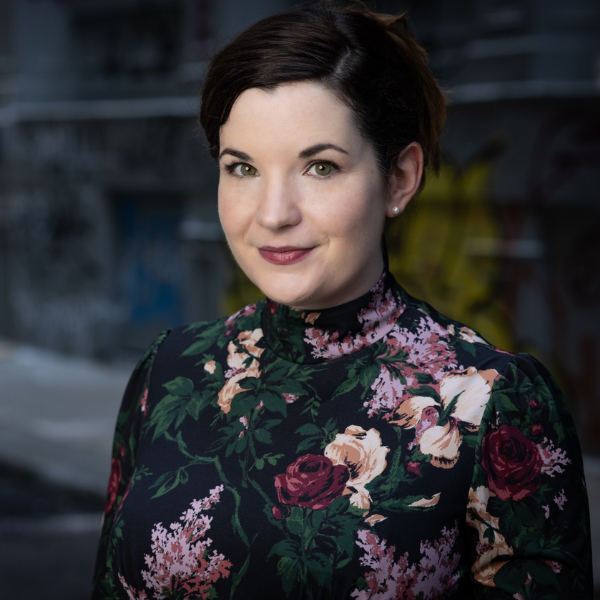
Speaker Image

Cairenn Binder

Assistant Director, IGG Center and the Director of the IGG Certificate Program

Cairenn Binder is the Assistant Director of the IGG Center and the Director of the IGG Certificate Program. Cairenn has been at the forefront of IGG since its inception, applying genetic genealogy to identify human remains with the nonprofit organization DNA Doe Project from 2018 through 2023.

Speaker Image

David Gurney

Assistant Professor of Law & Society | Director of the Investigative Genetic Genealogy Center, Ramapo College

Dr. David Gurney, JD/PhD is an assistant professor of Law & Society and Director of the Investigative Genetic Genealogy Center at Ramapo College. He is president of the Investigative Genetic Genealogy Accreditation Board and a board member of the Forensic Genealogy Special Interest Group of the Association of Professional Genealogists.

Speaker Image

Shannon Hodder

Senior Assistant District Attorney, DeKalb County District Attorney's Office

Shannon Hodder serves as a Senior Assistant District Attorney with the DeKalb County District Attorney’s Office in Decatur, Georgia, where she leads the Cold Case Task Force and prosecutes complex homicide cases, including those that have remained unresolved for decades. She has tried more than thirty murder cases to conviction—several of them cold cases, including a serial rapist and killer whose crimes spanned five states, a 20-year unidentified child homicide, a no-body murder, and a rape and double murder from 1990 involving Investigative Genetic Genealogy (IGG).

Speaker Image

Randy White

Supervisory Special Agent Federal Bureau of Investigation (FBI)

Supervisory Special Agent Randy White supervises the FBI Dallas Violent Crimes Task Force. SSA White oversees a squad of more than 20 special agents, detectives, and analysts. Before filling that role, SSA White was the Investigative Genetic Genealogy Coordinator for FBI Dallas where he worked to solve several homicides and sex assaults using IGG.

Speaker Image

Submit Question to a speaker