
Are you a passionate student pursuing a degree in forensic science, eager to dive into the world of cutting-edge research and groundbreaking advancements? Look no further! The ISHI Student Ambassador Program is your exclusive gateway to unparalleled opportunities at the International Symposium on Human Identification (ISHI) conference. The application window opens on February 2, 2026.
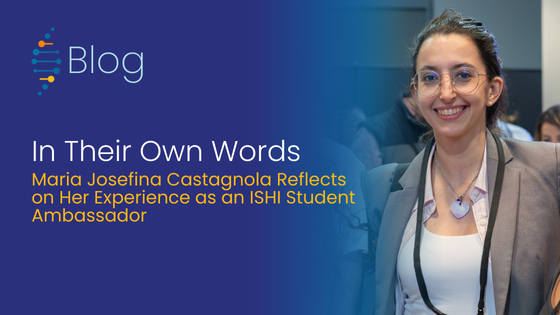
Each year, ISHI’s Student Ambassador program highlights emerging voices in forensic science. For Josefina, attending the 2025 symposium in West Palm Beach was a chance to share her research, connect with peers, and see firsthand how science can support justice on a global scale.
Originally from Argentina and now studying in the U.S., Josefina’s work focuses on refining DNA methylation protocols for age estimation in teeth—an evolving area in forensic anthropology. In this Q&A, she reflects on what it was like to present at ISHI, how the experience shaped her goals, and why she believes opportunities like this matter—especially for students coming from underrepresented backgrounds.
Now that you’ve presented your research as a Student Ambassador, how did the experience compare to what you once imagined? Was there a defining moment that made it feel “real”?
The experience was truly meaningful. I was a bit stressed at the beginning, but my fellow ambassadors and the people I met treated me incredibly well. It felt real the moment I got on the plane; I couldn’t believe the day had finally arrived after so much preparation. Throughout the week, spending time with the other Student Ambassadors, both during and outside the conference, also grounded me in the moment and reminded me how special the experience was. It also helped me appreciate how shared experiences can build a sense of community in our field.
Your research focuses on refining DNA methylation protocols for age estimation in teeth—a challenging but powerful tool in forensic anthropology. How was your work received at ISHI? Did you gain any new perspectives or collaborations that might shape your next steps?
I’m very happy with how my work was received. Several attendees approached me with insightful questions, and I love conferences for that reason; their questions made me reflect on my project, offering new perspectives and helping me grow as a scientist. Conversations with other Student Ambassadors also broadened my understanding of the many paths within forensic genetics and even opened the door to potential collaborations, including with another student also working on DNA methylation.
You’ve spoken about identity as a fundamental human right and your desire to contribute to justice through your work. How did the conversations and presentations at ISHI expand your vision of how forensic genetics can serve human rights investigations?
What I value about ISHI is that many presentations focus on real casework, from which we can learn directly. They also highlight emerging technologies and how they can be applied in practice. All of this is essential for advancing human identification and bringing relief to victims and their loved ones who need answers. The experience reinforced my conviction that research must stay connected to real-world challenges to truly support human rights. It is also important that innovation reaches the communities that depend on these identifications.
From AI to DVI, ISHI exposes attendees to cutting-edge techniques. What emerging technologies or ideas did you find most exciting? Were there any that challenged or expanded your thinking around epigenetic applications in casework?
Even though I’m currently working in epigenetics with pyrosequencing, the whole-genome sequencing workshop was extremely practical and gave me new tools to understand broader applications. I’m also interested in the use of AI in human identification; when applied responsibly, I believe it will become very important, including for data analysis in epigenetics. The presentations at ISHI were incredibly useful and covered a wide range of topics, showing how different technologies can complement one another.
Forensic epigenetics is still an emerging area. What challenges or opportunities did you discuss with other scientists at ISHI?
I had several conversations about age-estimation models, comparisons between gold-standard and emerging bisulfite conversion methods, different methylation assays, and available bioinformatic tools. We also discussed which tooth tissues are optimal for age estimation, which epigenetic markers are being explored, and the experiences of others working in this area. These discussions reinforced the importance of standardizing protocols if we want epigenetics to become routine in casework.
Coming from Argentina and now studying in the U.S., you bring an international lens to forensic science. How did your background shape the way you connected with others at ISHI?
Even though I’m currently focused on epigenetics, my background in Argentina (learning and working on forensic genetics cases at my university) gave me a broader scope and interests across different forensic areas. I love connecting with people from different countries, and ISHI is perfect for that. It allowed me to share experiences across scientific cultures and approaches, which enriched every conversation. Being from another country also helped me relate to other international attendees who are navigating similar transitions.
What did preparing and presenting your poster teach you about your own growth as a scientist?
Preparing to present or teach something forces a much deeper level of understanding. It makes you think about what others might ask, helps you refine your ideas, and allows you to anticipate challenges. The questions I received led me to rethink certain aspects of my project and grow through that reflection. It reinforced the value of communicating our work in a clear and accessible way.
What message would you share with students—especially those from underrepresented countries or communities—who might dream of attending ISHI one day but feel it’s out of reach?
Sometimes the circumstances aren’t ideal, but when opportunities appear, it’s important to take them and to actively seek them out. The more effort we put into our work, the greater the chances of obtaining opportunities like this. Leaving your comfort zone can be intimidating, but it is extremely rewarding. Networking is essential in today’s interconnected scientific community, and ISHI is a place where those connections can truly grow. I would also encourage them to apply even if they feel unsure; many young scientists underestimate their own potential.
After your experience at ISHI, what are your next research goals or collaborations you'd like to pursue? Has your time at the conference sparked any new questions you’re eager to explore?
My next research focus will be on advancing my thesis, guided by the feedback and questions I received on my preliminary results, as well as by insights from the conference regarding forensic needs. The ISHI experience was invaluable in helping me shape a stronger, more focused proposal. I plan to continue optimizing my model and exploring the questions that arose during the conference at each stage of the project.