
Are you a passionate student pursuing a degree in forensic science, eager to dive into the world of cutting-edge research and groundbreaking advancements? Look no further! The ISHI Student Ambassador Program is your exclusive gateway to unparalleled opportunities at the International Symposium on Human Identification (ISHI) conference. The application window opens on February 2, 2026.
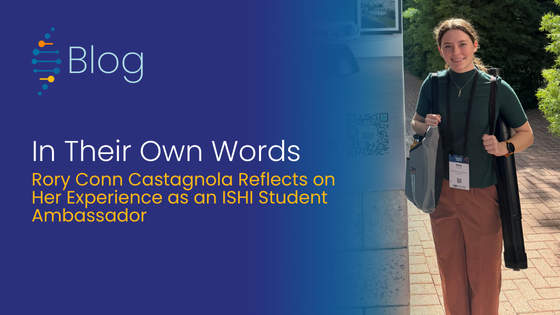
Rory arrived at ISHI 2025 with a unique research focus—using genotyping to help distinguish marijuana from hemp—and left with a renewed sense of purpose and a broader view of what’s possible in forensic science. From hands-on workshops with Rapid DNA tools to deep conversations about cannabis legislation and casework backlogs, Rory’s week was packed with perspective-shifting moments.
As a Student Ambassador, she not only presented her work but also found herself bridging disciplines, explaining how DNA fits into the future of drug analysis. In this Q&A, Rory reflects on what it means to do research that’s both technically innovative and people-focused—and how ISHI helped her envision a career path that blends lab work, policy impact, and ethical responsibility.
You’ve shared how presenting a DNA profile for a mock case—and learning it was based on a real survivor’s story—transformed your perspective on forensic DNA. How did presenting your own research at ISHI deepen that awareness or strengthen your sense of purpose?
Presenting mock case results and learning it was based on a real survivor’s story emphasized how closely forensic DNA work is tied to real people’s lives. Presenting my own research at ISHI strengthened that understanding even more. Having conversations about how my research could be applied to actual casework reminded me that forensic science research not only aims to improve techniques in the lab, but also to impact real cases, which in turn, can affect the people involved. Sharing my work at ISHI gave me a stronger sense of responsibility and purpose, and reinforced why thoughtful, ethical forensic science matters.
Your project tackles a unique challenge—applying genotyping to help distinguish marijuana from hemp in forensic contexts. What kind of questions or insights did your ISHI poster session spark? Did it change how you think about the future of DNA in drug analysis?
During my poster session, a lot of discussion was centered on how genotyping could complement current chemical methods used to distinguish marijuana from hemp. Several attendees were curious about the practical challenges, such as handling different cannabis sample types and mixtures, and how DNA-based approaches might address those limitations. Others raised questions about scalability and the potential for integrating cannabis genotyping into routine forensic workflows, possibly through a system like rapid-DNA. These conversations broadened my perspective on where the field could go, and they made me realize that DNA may have a much larger role to play in drug analysis than I initially imagined.
What new tools, techniques, or conversations at the conference caught your eye—and how might they influence your research or career path?
I was fascinated by much of the work being done at DNA Labs International, and their poster on the Evaluation of the Seratec® PSA/AMY Test Card stood out as a promising tool for simultaneously targeting multiple body fluids. I also learned a great deal about Rapid DNA technology through the workshop I attended and even had the chance to load a chip onto the ANDE Rapid DNA System during the vendor exhibition. Seeing these innovations up close made me excited about the future of forensic technology, and speaking with researchers across different areas helped me realize that career opportunities in this field extend far beyond traditional casework. It encouraged me to consider applying for research-focused positions as well.
Backlogs in drug testing impact public safety, case resolution, and forensic efficiency. How did your conversations at ISHI reinforce or reframe the role of DNA-based drug analysis as a solution?
Seeing how positively people reacted to the increased efficiency of the optimized cannabis genotyping workflow, especially when compared to traditional chemistry methods, showed me that the forensic community is open to DNA-based approaches as part of the solution to drug testing backlogs. While chemistry will remain the gold standard, my conversations at ISHI reinforced the idea that DNA methods can serve as a valuable complement, particularly when speed or sample quality pose challenges. Those discussions encouraged me to continue refining the workflow and to think more broadly about how DNA-based tools could support overloaded drug laboratories.
You’ve mentioned long-term goals that include working in a crime lab and pursuing a PhD in Forensic Science or Molecular Genetics. Did ISHI help shape or sharpen your vision for what’s next—whether through conversations with vendors, speakers, or fellow students?
ISHI broadened my view of the career paths available in forensic science. Conversations with vendors, researchers, and other students helped me see that opportunities extend far beyond traditional casework, and that research roles can be just as impactful and exciting. While I still hope to work in a crime lab, I’m now equally interested in pursuing research positions that will strengthen my laboratory skills and help me identify the right focus area for a future PhD in Forensic Science or Molecular Genetics.
How did the ISHI experience help you grow as a communicator, especially in explaining niche research to a broader audience?
During my poster session, I spoke with several attendees who were understandably surprised to see drug-focused research at a DNA conference. That gave me a valuable opportunity to grow as a communicator by clearly explaining how DNA-based techniques can be applied in drug analysis and why that connection matters. It pushed me to frame my work in a way that was accessible and relevant to a broader audience, rather than assuming prior knowledge of my niche area.
ISHI can be intense! How did you recharge during the week?
ISHI had its intense moments, but the Promega team and every attendee I met were so welcoming that it made the week feel exciting rather than overwhelming. Outside the conference, I recharged by exploring Palm Beach with the other student ambassadors and unwinding by the hotel pool, which gave me a nice balance between learning and relaxing.
What’s something you wish you had known before arriving at your first ISHI? What advice would you give to other students attending or presenting for the first time?
Before arriving at my first ISHI, I was nervous about presenting and unsure of what to expect, but I wish I had known just how fun and welcoming the conference would be. Everyone, from attendees to the Promega team, was incredibly kind and supportive, and even the extra responsibilities I had as an ambassador and presenter ended up making the experience more rewarding. For other students attending for the first time, I’d say: don’t be intimidated. Ask questions, talk to people, and enjoy the opportunity; you’ll learn a lot and form connections that make the whole experience unforgettable.