
A SNP profile can upload cleanly to GEDmatch, clear every filter, and still be wrong.
False-negative segments can knock a real relative off the match list entirely. False-positive segments can send an investigator chasing someone with no biological connection to the sample at all. Astrea Forensics has reanalyzed sequencing data originally generated by other labs and watched the top matches change completely. Same DNA. Different pipeline. Different match list.
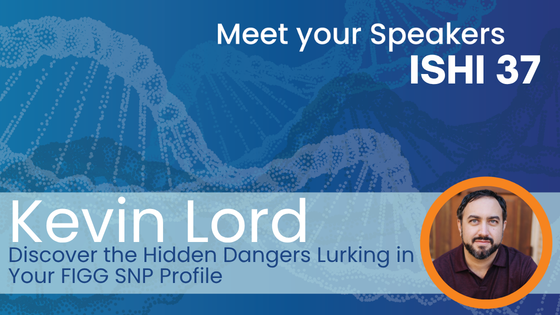
Kevin Lord, Director of Bioinformatics at Astrea Forensics, will present the case at ISHI 37 alongside Richard E. Green, the company’s co-founder, in a talk called “Discover the Hidden Dangers Lurking in Your FIGG SNP Profile.”
Below, Lord walks through what a compromised genotype file actually looks like, what SNPShake and astrea-sensitivity-test are built to catch before an investigation moves forward on a flawed profile, and what it takes to rebuild a profile from sequencing data when the original file can’t be trusted.
We asked Kevin a few questions ahead of his session.
The validation held up on bone and rootless hair. Those are the samples that usually leave an analyst with the least to work with.
What first drew you to this case, question, or problem?
We are sometimes asked to reanalyze sequencing data that was originally generated by another forensic DNA lab. In doing this, we are often asked if we expect our analysis might produce different results than the original analysis, and how our bioinformatics pipelines compare. This led us to create the two pieces of software detailed in the talk.
What's the single most important idea you want people to walk away with?
If you have a case with SNP profile generated from whole-genome sequencing data that exhibits poor matching performance, it might be worth getting a second opinion. Bioinformatics techniques in this relatively new space are constantly improving.
What are common misconceptions this talk addresses?
A big misconception is that if a profile uploads successfully to one or more genetic genealogy databases, matching performance will be adequate. Unfortunately, this just isn’t true.
What's the most interesting or unexpected thing you found doing this work?
We have had cases where we have reanalyzed sequencing data originally generated by another lab and the top FIGG matches have changed completely due to the previous kit having poor matching performance.
Who would benefit most from hearing this talk?
Anyone working FIGG cases, especially those that often work in identifying human remains and other difficult sample types.
What's one thing from this talk people can actually use once they're back at work, whether that's a technique, a case example, or a new way of thinking about the evidence?
Other labs will be able to use astrea-sensitivity-test to benchmark the FIGG matching performance of their own bioinformatics pipelines.
What are you most looking forward to at ISHI this year, besides your own session?
I work remotely, so it’ll be nice to see my Astrea colleagues also in attendance. Also looking forward to seeing other friends in the industry that I haven’t seen in a while.
What's your best advice for someone attending ISHI for the first time?
ISHI is great for networking! The talks are wonderful, but I highly recommend taking advantage of the face-to-face time with people you wouldn’t otherwise see. I landed my current role at Astrea from a conversation that started at a previous ISHI.
What do you enjoy doing when you're away from the office/lab?
I’m big into photography and especially enjoy film photography and alternative printing processes.