
A state crime lab ran DNA from a gun and got an inconclusive result: multiple contributors, no clean match. Probabilistic genotyping software reran the same evidence and returned a likelihood ratio of 11.5 trillion to one.
That gap, an inconclusive read against a number that precise, is exactly what got challenged on appeal. The Third Circuit’s answer, issued this March, walks through all five Daubert reliability factors one at a time: testability, error rate, standards, peer review, and general acceptance.
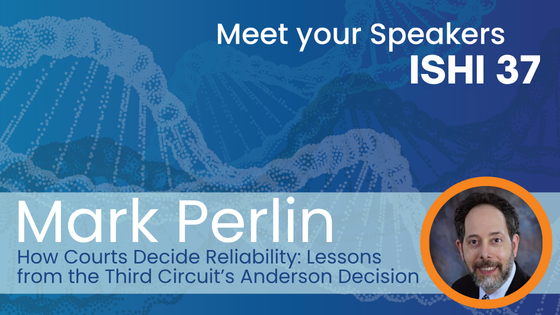
Mark Perlin, of Cybergenetics in Pittsburgh, testified in the case himself. At ISHI 37, he will present the ruling in a talk called “How Courts Decide Reliability: Lessons from the Third Circuit’s Anderson Decision.”
Below, Perlin walks through how the court weighed the familiar defense arguments, “black box” operation, proprietary source code, software complexity, against the validation record actually in front of it, and what the ruling means for any lab using software-based interpretation methods, not just this one case.
What first drew you to this case, question, or problem?
The clear, comprehensive, and engaging appellate opinion about scientific admissibility by US federal circuit court Judge Emil Bove. I had testified in the case and was impressed by Judge Bove’s deep understanding of the facts.
What's the single most important idea you want people to walk away with?
Testing and error rate are the cornerstones of DNA science admissibility under the Daubert standard. Opposition arguments that lack empirical support or scientific relevance are usually unpersuasive.
What are common misconceptions this talk addresses?
Can a fast-talking lawyer sweettalk a good judge into rejecting good science? No.
Can a good judge understand validation and error rates? Yes.
Can a great judge explain scientific reliability to laypeople? Absolutely!
What's the most interesting or unexpected thing you found doing this work?
How deeply some judges understand the reliability of science under the law. And how they clearly see through empty rhetoric about nonissues.
Who would benefit most from hearing this talk?
Scientists, lawyers, educators, journalists, the public. Anyone who is interested in the interplay of science and law, and cares about better science for better justice.
What's one thing from this talk people can actually use once they're back at work, whether that's a technique, a case example, or a new way of thinking about the evidence?
Learning to understand DNA evidence reliability from the judge’s perspective. Such insight translates into more effective scientific validation and court presentation.
What are you most looking forward to at ISHI this year, besides your own session?
Catching up with colleagues, and hearing about new DNA developments.
What's your best advice for someone attending ISHI for the first time?
Attend talks that sound interesting. Speakers should tell stories, not shower facts. And listeners should be receptive to new ideas but need evidence to believe them.
What do you enjoy doing when you're away from the office/lab?
Writing and playing music. At a recent judges conference, we brought our guitars.