
Are you a passionate student pursuing a degree in forensic science, eager to dive into the world of cutting-edge research and groundbreaking advancements? Look no further! The ISHI Student Ambassador Program is your exclusive gateway to unparalleled opportunities at the International Symposium on Human Identification (ISHI) conference. The application window opens on February 2, 2026.
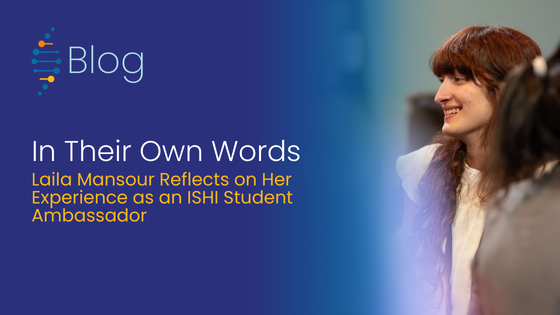
For Laila, forensic DNA is more than a technical pursuit—it’s a tool for justice, storytelling, and truth-seeking. As a Student Ambassador at ISHI 2025, she stepped into conversations she’s long admired—from disaster victim identification and post-conviction exoneration to the practical realities of working in one of the country’s busiest DNA labs.
Presenting her research on DNA extraction instruments, Laila found herself in dialogue with scientists from around the world. She also connected with key voices from the NYC OCME—an organization that first inspired her forensic path—and saw firsthand how science and communication go hand in hand. In this Q&A, she reflects on what it means to belong in the forensic community, why forensic botany is on her radar, and how ISHI helped her clarify where she’s headed next.
You’ve credited NCIS’s Abby and the NYC OCME with shaping your path into forensic DNA. What was it like stepping into ISHI as a Student Ambassador—surrounded by the very professionals and technologies that first inspired your journey?
It was so enlightening to hear experts in the field of forensic DNA share their experiences throughout workshops, speaker sessions, the poster sessions, and even the lunch breaks. Getting to speak with both fellow student presenters and professionals made me feel included in the forensic science community already and helped clarify my path moving forward in my degree and beyond!
Your research compared DNA yields from two extraction instruments—raising important questions about routine lab equipment. How did presenting this work at ISHI challenge you as a researcher or inspire ideas for your next validation study?
Presenting this research at ISHI was an incredible experience, and it opened up a lot of dialogue with people from laboratories across the country and even the world about the current extraction instrumentation being used. A lot of labs are in validation testing for the EZ2 right now as well, so it was helpful to hear the different perspectives about the challenges and successes of implementing that instrument.
You’ve spoken powerfully about DVI and humanitarian uses of forensic science, especially in post-9/11 NYC and with cases like the Sugar Land 95. Did any ISHI sessions expand your view of how forensic DNA can be used in truth-seeking and healing?
The plenary session by Jeffrey Deskovic was particularly powerful in speaking on the use of DNA in exoneration work like that of the Innocence Project. I had the opportunity to see a screening of a documentary about his case at my college in the weeks following ISHI, as Deskovic is a John Jay alum, and it truly speaks to the power of forensic DNA in the pursuit of justice even when the legal system fails.
You’ve long wanted to step inside the OCME DNA lab. Did your ISHI experience bring you any closer to that goal—through conversations, workshops, or meeting someone from the OCME team?
I had the incredible opportunity to interview both Dr. Craig O’Connor and Susan Horan, both of whom have worked at the OCME and have greatly impacted forensic science in New York City. The two of them shared their valuable insights on their experiences entering the field of forensics, working in laboratory versus legal/administrative settings, the unique challenges of working in a laboratory in New York City, and reflecting on their “Report to Court” workshop and the importance of evidence communication.
You’re pursuing both forensic science and English. How did your background as a storyteller shape how you approached presenting your work at ISHI—or connecting with other attendees?
What’s always exciting to me is how similar both the writing process and the scientific process are. Both are precise endeavors with the purpose of revealing some sort of truth. When presenting my work, I definitely made that my goal – to balance the specific details of the process while ultimately emphasizing the purpose and conclusions of the research.
As a student ambassador, what conversations or moments at ISHI made you feel like you were already part of the forensic science community? What advice would you give to other students still deciding if they belong in this field?
Attending varying workshops and being in the room for the conversations and debates that arose from discussing emerging techniques and best practices in the field definitely made me feel that I was part of the forensic science community. For other students still deciding if they belong in the field, my best piece of advice would be to talk to people! Everyone is so encouraging, generous with their time and knowledge, and simply want to help the next generation of forensic scientists succeed. My experiences talking with professionals in the field as well as other students has definitely solidified that this is the field I want to be in, and it’s exciting to be a part of such an amazing community of scientists that share the same goal of seeking justice.
How did you stay grounded, focused, and inspired during such a fast-paced week? (Was there an iced chai with espresso involved?)
It’s hard not to be inspired when listening to the talks of the all the interesting cases and research people have worked on. I definitely took advantage of the free meals and coffee to stay fueled and catch as many of the sessions as possible.
You’re already working on a forensic botany project and plan to pursue a PhD. What questions are you most excited to explore next, and did your ISHI experience shift or sharpen your research goals?
Forensic botany is such an underutilized field, so I’m excited to explore the capabilities and limitations of developing STR profiles for forensic identification of plants. I actually saw a poster of similar research utilizing a different plant species, so that was definitely informative and helpful to see how other labs are approaching this area of research. Speaking to the other student ambassadors about their projects and the stages of their education they are in definitely helped me in figuring out next steps of my own research education as well.
What’s the biggest thing you’re going to take away from your experience as an ISHI Student Ambassador?
The ISHI Student Ambassador experience was fulfilling in so many ways, but I think my biggest takeaway is the people I met. Getting to speak with leaders in the forensic DNA field, especially from places I would love to work at in the future, colleagues of my own professor, and the other student ambassadors definitely provided clarity on what my next steps are/could be as I look toward graduate school and beyond.