Daniel Arend has spent his PhD studying what happens to DNA during close-contact violence between people who know each other. How much transfers. Where it ends up. How long it persists.
Daniel is one of five ISHI 2026 Student Ambassadors attending this year’s symposium in Providence, Rhode Island. The Student Ambassador Program gives emerging forensic scientists a place at the table before most of the field knows their names. Over the coming weeks, we’ll introduce all five.
A PhD candidate at Sam Houston State University, Daniel came to forensic science through Eastern Kentucky University, where he earned a B.S. in Forensic Science with a concentration in forensic biology. His research examines DNA transfer, persistence, prevalence, and recovery in cases involving biting and strangulation by cohabitants or intimate partners, with the goal of generating data that supports more defensible activity level evaluations. At ISHI, he will present a poster on his findings.
Below, Daniel answers seven questions about his path into forensic science, the research question he can’t stop thinking about, and what he wants the community to know about the students entering the field right now.

What's your forensic science origin story — was it a TV show, a real case, or something you never saw coming?
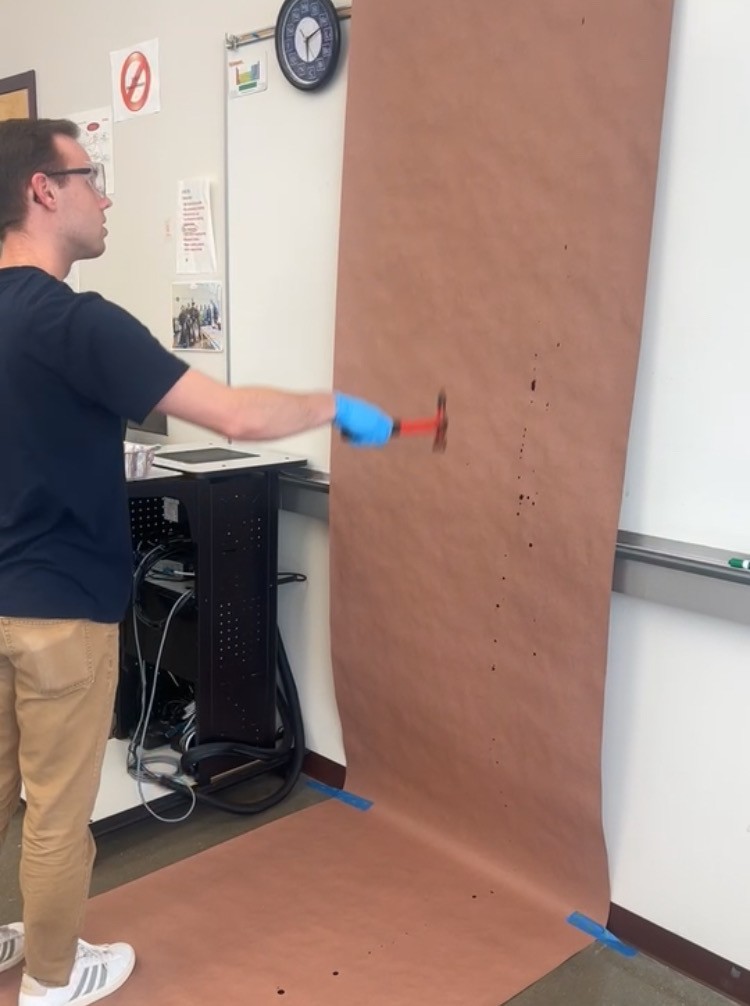
I first found out about forensic science when I was in seventh grade and a forensic scientist gave a demonstration to my class. She showed us evidence collection techniques, bloodstain pattern analysis, and talked about different cases she had worked on. I remember being fascinated by the way science could be used to answer questions in real investigations. Ever since then, I’ve been obsessed with forensic science, especially DNA analysis. That experience really shaped what I wanted to do with my future.
What's the thing in your program that nobody warns you about — and that you now feel obligated to tell every incoming student?
You need to have discipline and manage your time well. Balancing classes, meetings, work, research, and personal life can feel overwhelming, but it is manageable. Prioritizing tasks and deadlines, starting early, and making a schedule really help organize your time and ensure you can complete your work with high quality. I would also tell incoming students that graduate school requires you to be comfortable with constant learning. You are not expected to know everything right away, but you are expected to keep improving, ask questions, and take responsibility for your progress.
What stage of your journey are you at right now — and what does that actually feel like day to day?
As a second-year PhD student (about to start my third year), my day to day is mostly split between coursework, laboratory research, data analysis, and writing. Recently, a major focus has been writing and polishing my dissertation proposal. As I move into my third year, most of my coursework will be completed, allowing me to shift my attention towards my dissertation research involving whole-genome sequencing.
What's the research question you can't stop thinking about right now — even when you're nowhere near the lab?
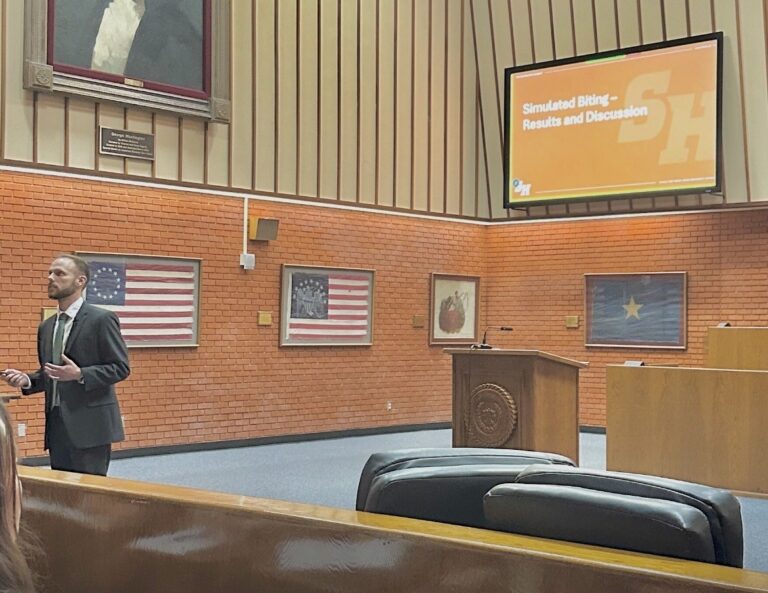
The research question I keep thinking about is how activity level propositions can be applied in forensic DNA interpretation. It is one thing to determine whose DNA may be present on an item, but it is another to understand how and when that DNA may have been deposited. I am especially interested in questions involving transfer, persistence, prevalence, and recovery of DNA. These questions are complex, but they are incredibly important because they help forensic scientists communicate the significance of DNA evidence in a way that is more meaningful.
What's the biggest misconception people have about what forensic scientists actually do all day?
The biggest misconception is that forensic scientists just work in the lab all day and get perfect results the same day. DNA analysis takes time, and forensic scientists do a lot of work away from the lab bench, including report writing, technical review, communicating with investigators and attorneys, testifying, training, and much more. Analysis results depend on the quality of the evidence, and often we recover degraded or partial profiles with challenging interpretation. Understanding what the evidence is telling us takes time, skill, and careful attention to detail. Forensic science is not as fast or as simple as it looks on television, but that is part of what makes the work so important.
What's one thing you're genuinely excited about at ISHI this year — and one thing that has you at least a little nervous?
I am genuinely excited to be surrounded by people who are passionate about forensic DNA analysis. ISHI brings together researchers, analysts, technology developers, students, and professionals from the forensic DNA community, so I am looking forward to learning about new methods, current challenges, and where the field is headed. The thing that makes me a little nervous is networking. As a student, it can be intimidating to walk into a room full of experienced professionals and start conversations. At the same time, I know that is one of the most valuable parts of attending a conference. I am trying to see that nervousness as a sign that I am stepping into the professional community I want to be part of.
The part I’m still making peace with is coding. Modern forensic genetics generates a large amount of data and analyzing that data requires computational skills. Learning to code has been challenging, but I’ve come to appreciate it as a tool that allows me to work with complex datasets and complete the research I am interested in.
What's the best part of lab life that nobody talks about — and the part you're still making peace with?
The best part of lab life that nobody talks about is the sense of routine and teamwork that develops behind the scenes. A lot of lab work depends on small details, consistency, organization, and people doing their part so that everything runs smoothly. I enjoy being part of that environment because it shows how much care goes into producing quality scientific work. The part I am still making peace with is that lab work can be repetitive, and progress is not always immediate. Sometimes you spend a lot of time preparing, cleaning, troubleshooting, or maintaining instruments before you ever get to the exciting part of the work. But I have learned that those tasks matter. Good science depends on good habits, and the routine parts of lab life are what make reliable results possible.
What do you want the forensic science community to know about the students walking into this field right now?
I want the forensic science community to know that students entering this field are motivated, serious, and eager to contribute. We understand that forensic science carries a lot of responsibility, and we want to be prepared for that. Many of us are drawn to this field because we care about science, justice, and the impact that forensic work can have on real people. Students today are also entering the field at a time when forensic science is rapidly evolving. New technologies, standards, interpretation methods, and expectations are shaping how forensic work is done. We want to learn from experienced professionals, but we also want to be part of the future of the field, and our flexibility with emerging technology and methodology can be a big help. We are ready to work hard, ask questions, and grow into scientists who can serve the forensic community with integrity.