Not every forensic lab can afford the top-of-the-line sequencer. Elizabeth Kowalczyk is finding out what the less expensive ones can actually do.
Elizabeth is one of five ISHI 37 Student Ambassadors attending this year’s symposium in Providence, Rhode Island. The Student Ambassador Program gives emerging forensic scientists a place at the table before most of the field knows their names. Over the coming weeks, we’ll introduce all five.
A second-year PhD student at the Center for Human Identification at UNT Health, Elizabeth works under Dr. Jennifer Cihlar on the practical application of low-pass whole-genome sequencing for forensic use. Her research has held genotype accuracy above 99.8% across a range of DNA input quantities. At ISHI 37, she will present a poster on her findings.
Below, Elizabeth answers seven questions about her path into forensic genetics, what the early stretch of a PhD actually looks like, and what she wants the forensic community to know about the range of students now entering the field.

What's your forensic science origin story — was it a TV show, a real case, or something you never saw coming?
In middle school, I became fascinated by true crime documentaries. One case that always stuck with me was the JonBenét Ramsey case. I went into the documentary assuming it would end with an answer; I had no reason to believe it would end any other way. I was shocked and horrified to learn decades later that this child’s murder was still unsolved and, potentially, would never be.
For years, forensics was simply a personal interest; I didn’t know how to turn that passion into a career. Instead, I moved towards medicine. In high school, I realized medicine was not for me. As I completed internships in both a hospital and a research laboratory, I discovered that I loved working in the lab, especially in genetics. Eventually, I found a way to combine my passion for forensics with my love of genetics, which led me to forensic genetics research!
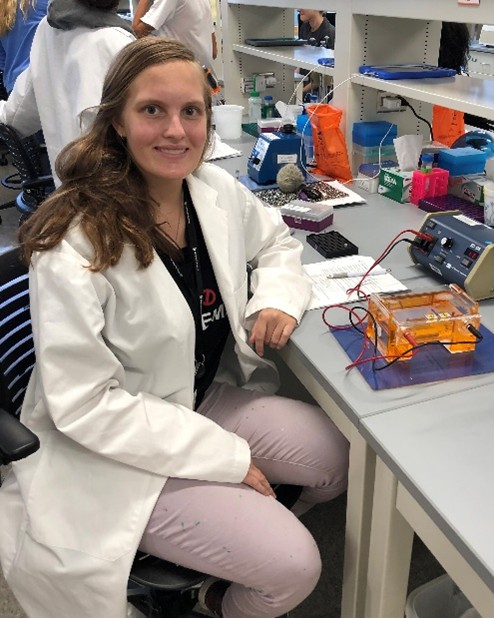
Elizabeth in her first laboratory (Hudson Alpha Institute of Biotechnology) from her high school internship.
What's the thing in your program that nobody warns you about — and that you now feel obligated to tell every incoming student?
I don’t think many people realize just how comprehensive the science courses involved in a forensic science degree are. Most undergraduate forensic science programs require courses such as organic chemistry, genetics, statistics, and molecular biology. While you’ll also take classes focused on crime scenes, evidence, and law, the science foundation is often much more than students expect.
What stage of your journey are you at right now — and what does that actually feel like day to day?
As a second-year PhD student (about to start my third year), my day to day is mostly split between coursework, laboratory research, data analysis, and writing. Recently, a major focus has been writing and polishing my dissertation proposal. As I move into my third year, most of my coursework will be completed, allowing me to shift my attention towards my dissertation research involving whole-genome sequencing.
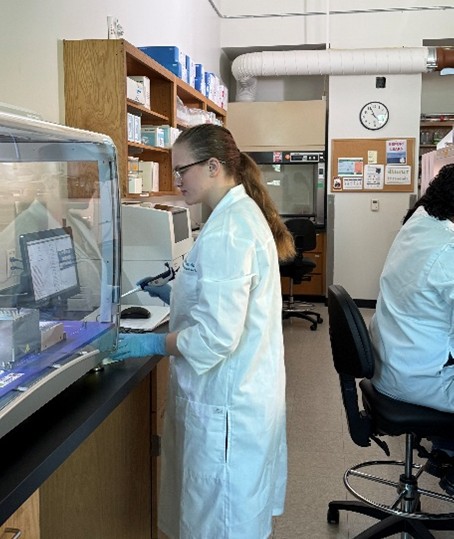
Elizabeth in a genetics lab during her second year of PhD school
What's the biggest misconception people have about what forensic scientists actually do all day?
One of the biggest misconceptions is that a single forensic scientist handles every aspect of a case. This is often called the “CSI Effect,” termed after television shows that portray one person doing everything from collecting evidence at the crime scene, analyzing DNA, examining ballistics, reconstructing faces, and helping make the arrest. In reality, a single forensic scientist is not assigned to one case. Rather, people collaborate and specialize. Crime scene investigators, DNA analysts, firearms examiners, forensic anthropologists, pathologists, and many others all contribute to their specialized expertise. Another aspect people often overlook is the research side of forensics, where scientists work to develop and improve the methods used in casework.
What's the one conversation, session, or experience you'd consider a win when you leave Providence?
For me, success would be making meaningful connections and expanding my professional network. Providence brings together experts from across the forensic science community, and even one or two strong connections can have a lasting impact, whether it’s receiving feedback on research, learning about emerging areas of the field, or creating opportunities for future collaborations.
What's the best part of lab life that nobody talks about — and the part you're still making peace with?
One of the best parts of laboratory work is that I can contribute to helping people without being directly involved in certain situations. During my hospital internship, I realized that working with patients wasn’t the right fit for me. I saw how emotionally challenging healthcare can be, both for patients and for professionals. I saw a similar thing when I worked with crime scenes and directly interacted with victims’ families. I have so much respect for the people and professionals who do that work, but I realized that the emotional day to day burden was not the best fit for me. The lab has given me the space to still contribute and help people, while working in an environment better suited for me.
The part I’m still making peace with is coding. Modern forensic genetics generates a large amount of data and analyzing that data requires computational skills. Learning to code has been challenging, but I’ve come to appreciate it as a tool that allows me to work with complex datasets and complete the research I am interested in.
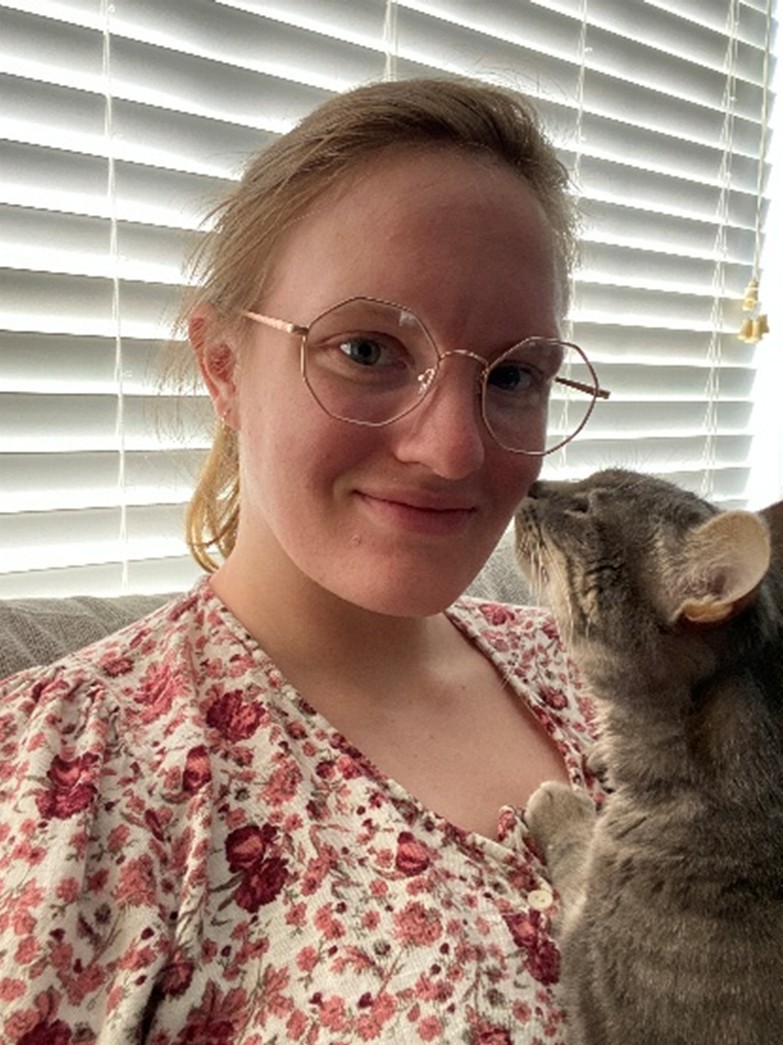
*Elizabeth working on coding hw with her cat Winnie.
What do you want the forensic science community to know about the students walking into this field right now?
I want the forensic community to know how many talented and interesting paths students are pursuing and how that will shape forensics. There are a broad range of students focusing on a broader range of fields and topics. For instance, there are students I know doing isotope research on burned remains, using machine learning to better inform facial reconstructions, and generating large amounts of genomic data with whole genome sequencing. There are students who have art degrees working on sketches, and nursing students going into forensic nursing. It is all so exciting to see what students have in store to shape the future of forensic science.
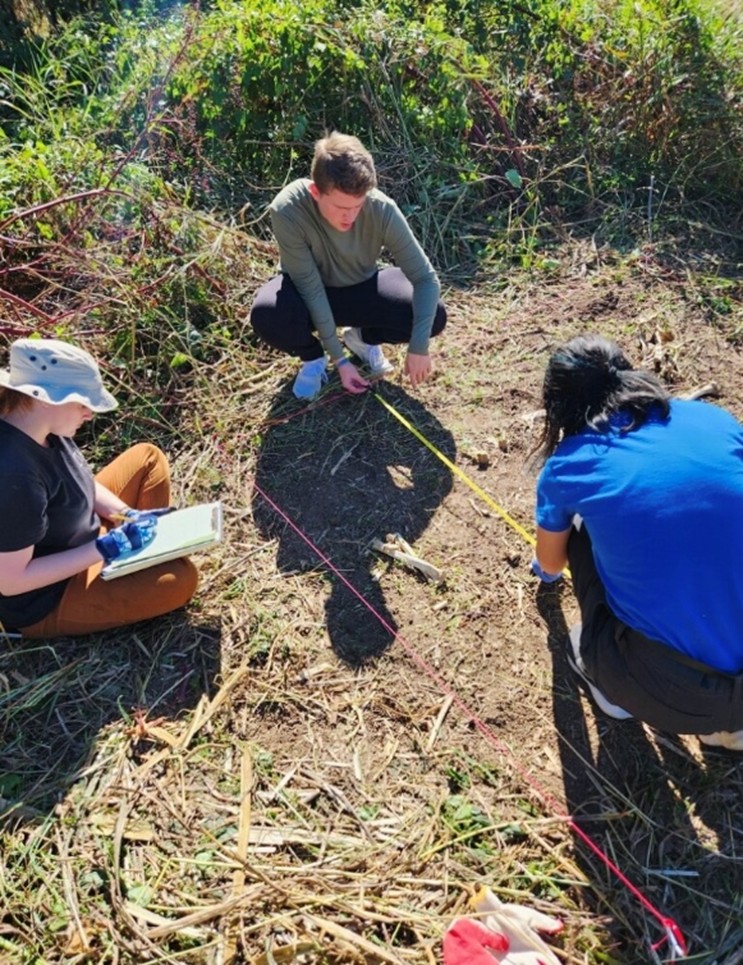
*Elizabeth working alongside fellow students in her undergraduate years.