
196 member countries. One shared DNA infrastructure. Most working analysts have never touched it.
INTERPOL runs two separate systems. One does what a national database already does: compares one profile to another. The other, I-Familia, runs kinship algorithms to compare a sample against relatives, built specifically for the unidentified remains and missing persons cases a direct match will never solve.
The bottleneck usually isn’t the science. It’s disparate legal frameworks, uneven technical infrastructure, a shortage of trained personnel, and coordination gaps between national police bureaus and the judicial authorities who have to sign off on using the data.
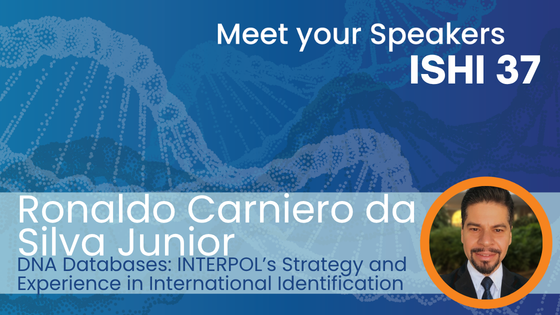
Ronaldo Carneiro da Silva Jr., of INTERPOL’s DNA Unit in Lyon, France, will present the strategy behind closing those gaps at ISHI 37 in a talk called “DNA Databases: INTERPOL’s Strategy and Experience in International Identification.”
Below, Ronaldo talks about what a lab actually needs to start exchanging profiles internationally, and the training INTERPOL runs to close the infrastructure gap between countries.
What first drew you to this case, question, or problem?
Transnational criminal cases and missing persons investigations are far more common than many people realize, and they often present unique challenges for law enforcement agencies. The ability of DNA to connect cases across countries and reunite families makes it an especially powerful tool for international cooperation.
What's the single most important idea you want people to walk away with?
I want attendees to understand that the INTERPOL DNA Database and I-FAMILIA are valuable resources that can significantly improve the investigation of transnational crimes and missing persons cases. By making better use of these international tools, countries can strengthen collaboration, generate new investigative leads, and increase the chances of solving cases that cross national borders.
What are common misconceptions this talk addresses?
One of the biggest misconceptions is the limited awareness of the international tools available for sharing forensic DNA data. Many professionals are familiar with DNA databases within their own countries but are less aware of the mechanisms that enable secure and effective international DNA profile exchange. This talk aims to highlight these resources and demonstrate how they can be integrated into routine casework.
What's the most interesting or unexpected thing you found doing this work?
One of the most surprising aspects of this work is how frequently international DNA matches occur. These cross-border hits happen more often than many people expect and have the potential to solve criminal investigations and missing persons cases that have remained unresolved for years. Seeing long-standing cases finally reach a resolution through international cooperation is one of the most rewarding outcomes of this work.
Who would benefit most from hearing this talk?
This presentation would be especially valuable for DNA Database Custodians, law enforcement officers, and forensic DNA experts. It would also benefit investigators, forensic laboratory managers, and anyone involved in international criminal investigations or missing persons cases who wants to better understand how international DNA data sharing can support their work.
What's one thing from this talk people can actually use once they're back at work, whether that's a technique, a case example, or a new way of thinking about the evidence?
I hope attendees will leave with the confidence and practical knowledge to begin exchanging DNA profiles internationally through INTERPOL’s available tools. They will gain a better understanding of how these systems work, when they should be used, and how international DNA cooperation can become a routine part of their investigative strategy for eligible cases.
What are you most looking forward to at ISHI this year, besides your own session?
I’m looking forward to learning about the latest developments in forensic DNA technologies and hearing how other laboratories and organizations are addressing current challenges. ISHI is also an excellent opportunity to network with colleagues from around the world, exchange experiences, and build professional relationships that can lead to future collaborations.
What's your best advice for someone attending ISHI for the first time?
Make the most of the entire experience. Attend as many presentations as you can, even those outside your immediate area of expertise, because they often provide fresh perspectives and new ideas. Just as importantly, take advantage of networking opportunities during breaks and social events to meet new people, exchange experiences, and build lasting professional connections.
What do you enjoy doing when you're away from the office/lab?
Outside of work, I enjoy staying active by playing sports and spending time with friends. These activities help me recharge, maintain a healthy work-life balance, and return to work with renewed energy and perspective.