
As we begin planning for the next ISHI, we’re excited to welcome new voices to the Advisory Committee. These members bring fresh insight, deep expertise, and a shared commitment to moving forensic science forward.
We also want to express our heartfelt thanks to those rotating off the committee. Your ideas and input have helped shape ISHI into the dynamic, inclusive community it is today.
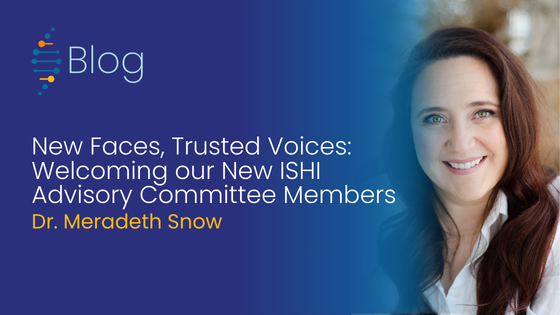
We’re excited to welcome Dr. Meradeth Snow to the ISHI Advisory Committee! With a deep background in degraded and ancient DNA and a passion for applying cutting-edge technologies like NGS and FIGG, Meradeth brings both technical expertise and a collaborative spirit to the table.
Many in the forensic community already know her as a researcher, mentor, and professor at the University of Montana—someone who bridges the worlds of lab innovation and real-world impact.
Get to know what drives her, what challenges she sees ahead, and what she’s most excited about as she joins the ISHI planning process.
What drew you to the field of forensic science, and how has your journey shaped your perspective on where the field is headed?
I was drawn to this field because of my skillset in working with degraded DNA and recognizing that I had something that maybe I could offer for some cases that were coming through our forensic anthropology program at the University of Montana. My journey has been shaped by the amazing projects I’ve had the pleasure of working on, and the people I’ve been able to work with and for. Especially my work with NGS and ethical underpinnings of FIGG has been vitally important, and I look forward to seeing how the field develops in the years to come, particularly in these arenas.
In your opinion, what is the most pressing challenge facing forensic DNA today—and what role can ISHI play in addressing it?
While I’m not sure if it is the most pressing, something that I would like to see improved upon is that there is so much amazing research coming out of schools and programs that are excellent tools for all kinds of forensic work…but making sure that gets to the labs and departments where it can be implemented isn’t always a smooth process. This is where I think ISHI is so vital and can help to integrate more of the research and application worlds. Having such an important meeting for practitioners and researchers to talk and discuss is the most important step, and hopefully leads to solving more cases.
What innovations or tools are you most excited to see impacting the forensic field in the next 5–10 years?
Because I’ve been a long-time user of NGS, I have to admit I’m a bit biased here in saying that I look forward to this becoming more of a widespread practice in labs. It can be faster, cheaper, and offer so many more tools that I think it’s definitely going to be used more down the line. And with that, the process for implementing FIGG isn’t all that different, and I really look forward to seeing that more, because we are already seeing the impact it can make, and widespread use (if done ethically) can really do some awesome things.
What’s a case, project, or moment in your career that fundamentally changed the way you think about forensic science?
Because I’m a professor first, I think some of the most fundamental things that changed me, or make me really appreciate the work I’m able to do, is through teaching my students how to become part of the field. I have been so lucky to have some of the most amazing undergraduate and especially graduate students, who have gone on to do amazing things on their own, and I’ve been so happy to be part of their journey. While I love the work I’m so privileged to do, it’s working with the future scientists that has been my foundation and really made me continually think about what I’m doing, teaching, and showing them, because I want them to go on to be rockstars. While this isn’t exactly an “aha!” moment, it is definitely what has changed and shaped all that I do.
From your perspective, what makes ISHI unique among forensic conferences?
First, it’s definitely the most fun conference I’ve been to, and I love all the ways that are built into the schedule to help people mingle and get to know one another. Also, as I noted above, the mix of researchers and practitioners is fundamental, and not something I see in the other academic conferences I attend. Also, hands down, best swag, haha 😊.
As a new member of ISHI’s Advisory Committee, what impact do you hope to make, and what do you hope ISHI continues to do for the global forensic community?
ISHI is one of those conferences where I go knowing I’m going to be in excellent company. I joke that it’s where I get to learn and talk with “my people” because we’re all doing similar things, and maybe not going to be weirded out by a discussing at lunch about some wild case we had during the last year. My goal is to hopefully add to this aspect in some way. I’m so new to this process that I don’t even really know how that would look, but at this point that’s what is floating around in my mind.